Smart Ways to Peel Garlic Without the Smell
Introduction
Garlic is powerful, flavorful, and essential in almost every kitchen. But the one thing people hate is the smell it leaves on your hands. The sulfur compounds that make garlic delicious are the same ones that cling to your skin for hours. If you want the flavor without walking around smelling like a garlic factory, you need smarter peeling methods—not the usual “just wash your hands” advice that barely works. Here’s the complete guide to peeling garlic without stinking up your fingers.
Why Garlic Smell Sticks to Your Skin
Before you jump into solutions, understand the problem. Garlic contains allicin and other sulfur compounds. When you crush, peel, or cut garlic, these compounds bind to the oils on your skin. Water alone can’t remove them because oils aren’t water-soluble. Soap helps, but not enough. That’s why even after washing, the smell stays.
So the real trick is simple: avoid direct skin contact or neutralize the compounds instantly.
Use the Shake-in-a-Jar Method
One of the easiest, fastest, and completely hands-off methods.
How It Works
You put garlic cloves inside a jar with a lid and shake the hell out of it.
Steps
- Take a small jar with a tight-fitting lid.
- Put the garlic bulb or separated cloves inside.
- Close the lid.
- Shake vigorously for 10–20 seconds.
- Open the jar—your garlic cloves should be fully peeled.
Why It Prevents Smell
Your hands never touch the garlic skin directly. No smashing, no rubbing. Zero exposure.
When It Works Best
- Fresh garlic
- Medium-sized cloves
- Several cloves at once
If the garlic is old or dried out, this method may be less effective, but it still avoids the smell.
Use Silicone Garlic Rollers
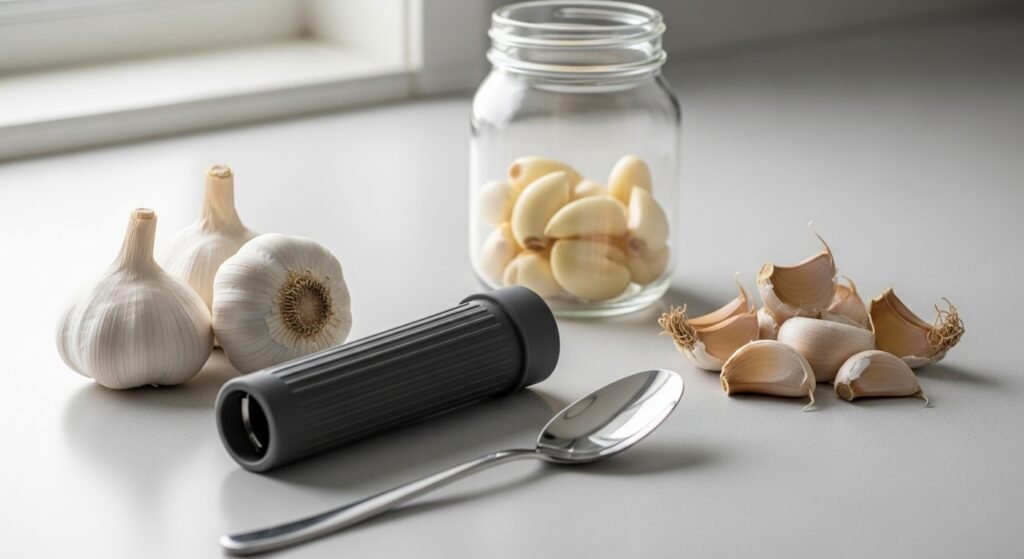
These cheap kitchen tools exist for one reason: peel garlic without touching it.
How to Use It
- Put the garlic clove inside the silicone tube.
- Roll the tube back and forth on the counter with gentle pressure.
- The peel slides right off and stays inside the tube.
Why It’s Good
- No hand contact
- No sticky residue
- Works on old and fresh garlic
- Easy to wash
If you cook garlic daily, buy one. It costs almost nothing and saves time and smell.
Use Gloves for Complete Protection
If you really want zero smell, gloves guarantee it.
Options
- Disposable nitrile gloves
- Thin reusable kitchen gloves
- Food-safe plastic gloves
Why It Works
The sulfur compounds never touch your skin. Remove the gloves and your hands smell like nothing.
Downsides
- Not convenient if you peel garlic often
- Wasteful if using disposable gloves daily
But for big batches—like meal prep, pickles, or garlic chutneys—gloves are unbeatable.
Freeze Garlic Before Peeling
Cold temperatures change the texture of garlic skin, making it harder and easier to remove.
How to Use
- Put whole garlic cloves or bulbs in the freezer for 30–40 minutes.
- Remove and lightly crush the clove with a knife body.
- The peel cracks and slides off quickly.
Benefit
You handle the garlic for less time, reducing exposure to sticky compounds. The cold also slows down how fast the smell transfers.
Use the Microwave Trick
This method works shockingly well and gives you clean cloves with almost no effort.
Steps
- Put unpeeled garlic cloves in the microwave.
- Heat for 10 seconds.
- Let them cool for a moment.
- Squeeze the clove gently—it pops right out.
Why It Prevents Smell
The heat loosens the skin, so you barely touch the garlic flesh. Minimal contact = minimal smell.
Extra Benefit
Works great for garlic that has been sitting a long time with tough, dry skins.
Use a Knife—but in a Smarter Way
Most people crush garlic with their hands and knife together, which transfers the smell instantly. But you can avoid this.
Method
- Place the clove on the cutting board.
- Use the flat side of the knife to press—lightly.
- The skin breaks and separates.
- Lift the skin off using the knife tip, not your fingers.
Why It Helps
Your fingers only touch the surface of the peel, not the sticky garlic part.
Tip
Keep your hands away from the crushed opening of the clove—that’s where the intense smell comes from.
Use Olive Oil to Prevent Smell Transfer
This is less popular but very effective.
Steps
- Rub a drop of cooking oil on your hands before touching garlic.
- Peel garlic as usual.
- Wash with soap afterward.
Why It Works
Garlic sulfur sticks to skin oils. When you have a protective oil layer already, the garlic compounds bond with that instead of your natural skin oils. Soap removes it completely.
Bonus
Your hands feel softer and smell-free afterward.
Peel Garlic Under Running Water
Water reduces friction and smell transfer—if used correctly.
How to Do It
- Break the garlic bulb.
- Turn on a slow running stream of cold water.
- Peel cloves under the water.
- Keep fingers away from the crushed garlic surfaces.
Why It Works
Water washes away some of the sulfur compounds before they bind to your skin.
Limitations
- Works better for fresh garlic
- Doesn’t eliminate smell completely, but reduces it majorly
Still a solid method when you don’t have tools.
Buy Pre-Peeled Garlic When You Need Convenience
Not ideal for maximum freshness, but extremely practical.
Benefits
- No peeling
- No chopping
- No smell on hands
- Consistent clove size
Caution
Pre-peeled garlic loses flavor faster. It’s great for fast cooking but not for special recipes where garlic flavor matters.
Use a Garlic Peeler with Spikes or Rough Surface
Newer peelers have textured inner surfaces that grab the peel better.
How It Works
You place the clove inside and rub gently.
The friction removes the peel without touching the garlic itself.
Benefits
- No smell
- Works for all sizes of cloves
- Durable and easy to clean
Strategy
If you cook often, get one with a washable rubber or silicone body.
Use a Spoon to Scrape the Peel
If you don’t want to crush the garlic at all, use a spoon.
Method
- Hold the spoon in one hand.
- Scrape the garlic skin using the spoon edge.
- The peel lifts off without breaking the garlic.
Why It Helps
You avoid using your nails or fingertips, which normally soak up garlic smell.
The spoon takes all the impact.
Best For
- Old garlic with thin skins
- Small cloves
- People with sensitive skin
Use Onion Peeling Technique
Yes, this works for garlic too.
Steps
- Cut off the tough root end slightly.
- Make a shallow vertical slit along the side.
- Peel off the loosened skin with a knife, not your fingers.
Why It Works
The skin opens cleanly, so you don’t squeeze the garlic or expose it too much.
Use Steel to Remove Any Leftover Smell Immediately
Even if you do touch garlic slightly, you can eliminate the smell instantly with stainless steel.
Steps
- Rub your hands on a stainless-steel spoon, faucet, or sink surface under running water for 10–20 seconds.
- Wash with soap.
Why It Works
The metal neutralizes the sulfur compounds chemically.
It’s not magic—it’s science.
When to Use
When you accidentally touched garlic and want to fix the situation fast.
Combine Two or More Methods for Zero Smell
If you’re cooking for a big group or prepping a lot of garlic, don’t rely on a single trick.
Best Combinations
- Silicone roller + stainless steel
- Shake-in-jar + knife tip removal
- Gloves + microwave
- Frozen cloves + spoon scraping
Using two methods ensures no contact, no smell, and faster peeling.
When Your Hands Still Smell—Fix It Quickly
If the garlic smell still got you, don’t panic. Remove it effectively.
Best Solutions
- Rub hands with salt and lemon
- Rub hands with baking soda paste
- Rinse with vinegar (strong but effective)
- Use stainless steel under running water
These methods break down the compounds instead of masking them.
Final Thoughts
Peeling garlic without smelling like garlic is absolutely possible—you just need smarter technique, not harder work. Whether you use tools, heat, cold, gloves, or friction, the key is minimizing skin contact with the garlic’s exposed flesh. Combine methods, find the ones that fit your cooking routine, and forget about walking around with garlicky hands ever again.