Fast Ways to Soften Butter Without Melting It
How to Soften Butter Quickly Without Melting It
Most people only realize they need softened butter after they start baking. Then the panic hits—you don’t have an hour to let it soften naturally, and you know microwaving it will ruin the texture and mess up your recipe.
Good news: you don’t need to melt butter to soften it fast. You just need the right method. This guide gives you practical, no-nonsense ways that actually work every single time.
Why Softened Butter Matters More Than You Think
Softened butter isn’t a suggestion—it’s essential for proper baking. When butter is at the right temperature:
- It creams properly with sugar
- It traps air, giving cakes and cookies their lift
- It blends evenly without creating greasy spots
- It gives dough the right texture
If you melt butter accidentally, you lose structure. Your cookies spread too much, cakes get dense, and frostings turn runny. So you must soften it—not melt it.
What “Softened Butter” Really Means
Most people think softened butter is warm or mushy. That’s wrong.
Softened butter should:
- Be around 18–20°C (65–68°F)
- Hold its shape
- Dent slightly with gentle pressure
- Not look oily or glossy
If it’s shiny or collapsing, you’ve gone too far.
Once you understand this, you’ll avoid ruining your butter.
Method 1: Cut Into Small Cubes (Fastest and Safest)
This is the best method because it’s reliable and avoids melting.
How to do it:
- Take cold butter straight from the fridge.
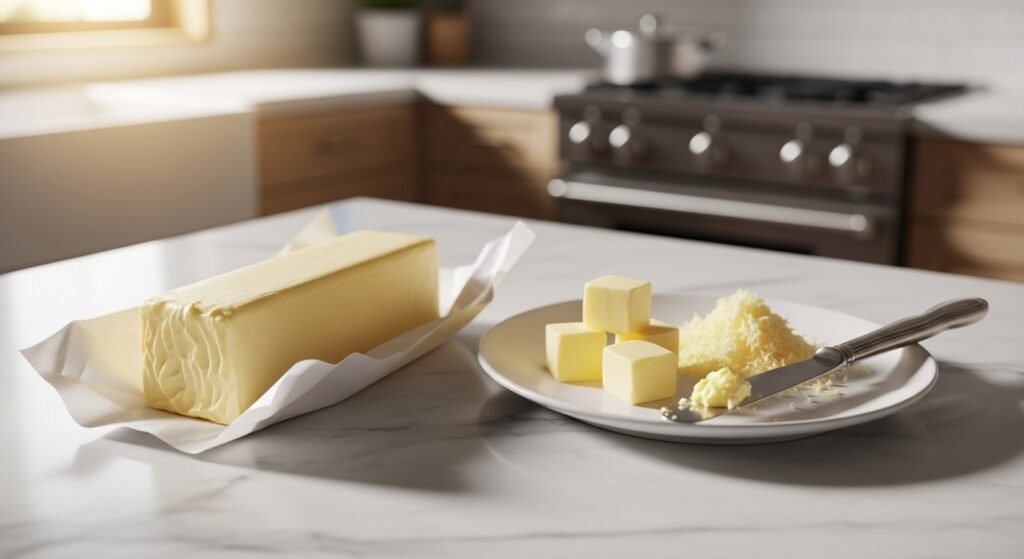
- Cut it into small cubes (about 1–2 cm).
- Spread the cubes apart on a plate.
- Leave them at room temperature for 5–10 minutes.
Smaller pieces soften faster because surface area increases.
This method gives you perfectly softened butter without risk.
Method 2: Grate the Butter
If you want the quickest softening with zero chance of melting, grating is unbeatable.
How to do it:
- Use the large holes of a box grater.
- Grate cold butter into fluffy shreds.
- Spread the shredded butter on a plate for 1–2 minutes.
The thin strands warm almost instantly.
Perfect for baking when you’re in a rush.
Method 3: Pound the Butter With a Rolling Pin
This is aggressive but effective when butter is rock solid.
How to do it:
- Put butter in a ziplock bag or between two sheets of parchment.
- Pound it flat using a rolling pin.
- Fold it and pound again.
- Flatten it to a thin sheet and let it sit for 5 minutes.
Thinner butter softens fast and evenly.
This also gives you better control than warming it.
Method 4: Warm a Glass to Create a Mini Greenhouse
This is a classic chef trick. Works perfectly if you have a microwave or hot water nearby.
How to do it:
- Fill a tall glass with hot water.
- Let it sit for 30 seconds to heat up.
- Dump the water and quickly dry the glass.
- Place the warm glass upside down over the butter.
The trapped warm air gently softens the butter in 3–5 minutes, without melting it.
Method 5: Use a Warm Bowl for Larger Quantities
If you’re softening a whole block, a warm bowl is more practical than a glass.
How to do it:
- Microwave a bowl for 30–40 seconds (empty).
- Place the butter on a plate.
- Cover it with the warm bowl.
- Let it sit for 5–7 minutes.
You get an evenly softened block without liquefying the edges.
Method 6: Use the “10-Second Microwave Hack” (Only If You Know What You’re Doing)
Most people screw this up by blasting the butter. Don’t do that.
This trick works only if you follow exact steps.
How to do it:
- Cut the butter into cubes.
- Arrange cubes around the edge of a microwave-safe plate (not in the center).
- Microwave on 20% power (defrost mode) for 8–10 seconds.
- Check every 5 seconds if needed.
Low power warms butter gradually instead of melting it.
If you see glossiness, stop immediately.
Method 7: Use the Warm Hand Trick (Good for Small Amounts)
This is the best method if you just need a tablespoon or two.
How to do it:
- Wrap the butter piece in parchment.
- Hold it gently between your palms.
- The body heat softens it in 30–60 seconds.
Don’t squeeze aggressively—you’ll melt the outside while leaving the inside hard.
Method 8: Soften Butter While You Prep Other Ingredients
This isn’t a hack—it’s just smart workflow.
If you know you need softened butter:
- Take it out before you measure flour
- Let it sit while you preheat the oven
- Allow it to warm up while gathering tools
In 10–15 minutes, most sticks soften naturally.
This prevents panic later.
Tips to Avoid Accidentally Melting Your Butter
Most problems happen because people rush.
Use these principles to avoid disaster:
Never:
- Microwave butter on high
- Leave butter near a hot stove
- Place butter under direct sunlight
- Use a hot water bath
- Use oven warmth
These methods heat unevenly and melt edges quickly while the interior stays hard.
How to Know If You Over-Softened or Partially Melted
Symptoms of butter that’s gone too far:
- Looks glossy or oily
- Has melted puddles
- Is collapsing or slumping
- Feels warm to the touch
- Leaves shiny residue on fingers
If this happens, put it in the fridge for 3–5 minutes.
It will firm enough to use safely.
What to Do If Butter Completely Melts
Don’t panic. You can still use melted butter—it just changes the recipe result.
For cookies: They’ll spread more. Chill dough for 20 minutes.
For cakes: Your batter will be denser. Add 1–2 tbsp flour.
For frostings: It’s ruined; get new butter. No fix.
If melted butter is not what the recipe needs, don’t force it.
How Different Butter Types Soften
Not all butter behaves the same.
Salted vs Unsalted
Salted butter softens slightly faster because salt lowers the freezing point.
Difference is small but noticeable when you’re rushing.
European-Style Butter
Higher fat → Softens quicker
Better for baking but easier to over-soften.
Grass-Fed Butter
Firmer at cold temperatures
Needs 2–3 extra minutes to soften compared to regular butter.
Best Methods for Different Situations
Here’s the straightforward breakdown:
- If you need butter FAST: Grate it
- If butter is rock hard: Pound it
- If you want zero risk: Hot glass method
- If softening a whole block: Warm bowl
- If using a microwave: Low power only
- If you need a tablespoon: Warm hands method
This way, you pick the right technique every time.
How to Store Butter So It Softens Faster
Your storage habits matter.
Keep Butter in the Main Compartment
The fridge door is too warm and inconsistent.
Store it inside the fridge so it softens more evenly later.
Leave a Butter Dish on the Counter (If You Use Butter Daily)
If your house temperature stays below 22–23°C, you can safely leave butter out in a covered dish for 1–2 days.
This gives you always-soft butter without any hacks.
How Professionals Soften Butter in Restaurants
Chefs don’t wait for butter—they force it to behave.
Common professional methods include:
- Smashing butter with a spatula on a board
- Using a metal bowl warmed over steam (very briefly)
- Using a dough scraper to chop into tiny pieces
- Mixing butter with a few drops of warm water (for frosting only)
You don’t need all these, but smashing and chopping are highly effective.
Why You Should Avoid Pre-Softened Butter from Stores
Some shops sell “soft” butter that’s actually processed to stay spreadable.
It contains oils or additives.
Avoid it if you’re baking — it changes texture and ruins structure.
Use real butter always.
Final Thoughts
Softening butter quickly isn’t magic—it’s about controlling temperature and surface area.
If you cut, grate, smash, or warm the air around butter, it softens fast without melting.
Pick the method that suits your situation, and stop sabotaging your recipes with half-melted butter.