Easy Salmon With Fresh Mango Salsa Recipe
Salmon With Mango Salsa Recipe
Why Salmon and Mango Salsa Is a Perfect Combination
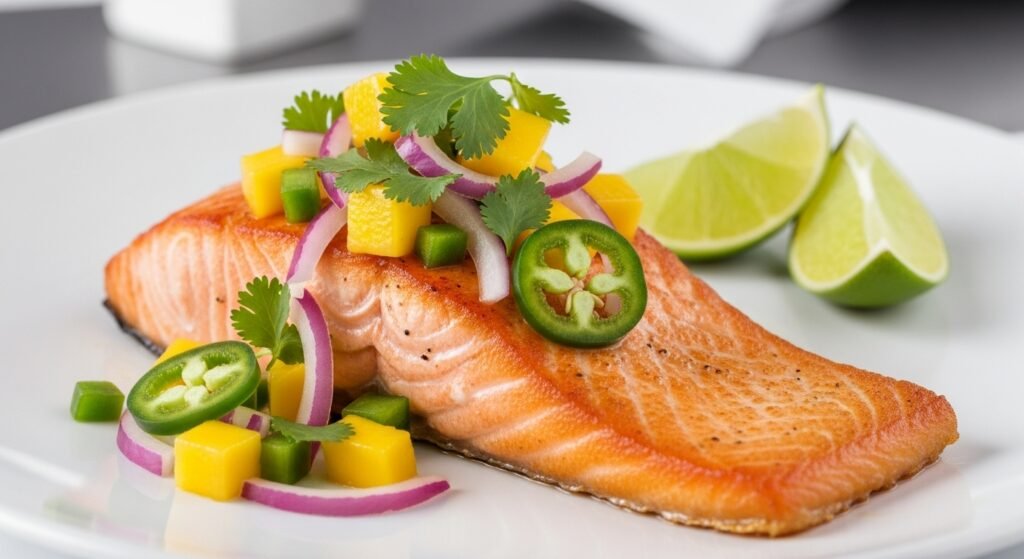
Salmon with mango salsa is one of those dishes that looks fancy but is unbelievably simple to make. It’s the perfect balance of richness and freshness. Salmon is fatty, buttery, and savory, while mango salsa is bright, sweet, tangy, and fragrant. When you put them together, the flavors hit every angle — sweet, acidic, savory, spicy, and refreshing. The contrast makes the dish taste cleaner and lighter, even though salmon is naturally rich. This is why high-end restaurants serve fruit salsas with grilled or seared fish: it cuts the heaviness and adds layers of flavor without overpowering the fish. If you do it right, this recipe tastes like something served at a coastal resort, but you can make it at home with very basic ingredients.
Choosing the Best Salmon
If the salmon isn’t good, the dish collapses immediately. Fresh salmon should smell clean, not fishy. The color should be bright and vibrant. Avoid salmon that looks dull, brownish, or overly slimy. Wild-caught salmon has firmer texture and stronger flavor, while farm-raised salmon is milder and fattier. Both work, but adjust cooking time — wild salmon cooks faster. If buying frozen salmon, thaw it properly in the refrigerator, never at room temperature. Skin-on fillets are better for pan-searing because the skin protects the flesh and crisps up beautifully.
Why Mango Salsa Works So Well With Salmon
Mango salsa cuts through the richness of salmon. The sweetness balances the savory, the acidity brightens the dish, and the herbs add freshness. If your mango salsa tastes flat, the entire dish will taste flat, even if the salmon is cooked perfectly. That’s how important the salsa is. Mangoes must be ripe — slightly soft, fragrant, and naturally sweet. A hard mango will ruin the salsa. Lime juice adds brightness. Jalapeño or chili adds heat. Red onion adds sharpness. Cilantro brings herbaceous freshness. These ingredients aren’t optional fillers; they are critical to creating a balanced salsa that elevates the salmon instead of sitting on top of it.
Core Ingredients You Need
You don’t need anything fancy for this recipe. Everything is basic:
For the salmon:
Salmon fillets
Olive oil
Salt
Pepper
Paprika
Garlic powder
Lemon juice
For the mango salsa:
Ripe mango
Red onion
Cilantro
Lime juice
Jalapeño or green chili
Red bell pepper (optional but adds crunch)
Salt
These ingredients combine into a dish that tastes far more sophisticated than the effort required.
The Best Salmon With Mango Salsa Recipe
Here’s the most optimized recipe: flavorful, balanced, and straightforward.
Ingredients
4 salmon fillets
2 tbsp olive oil
1 tsp paprika
1/2 tsp garlic powder
Salt and pepper
Juice of half a lemon
For the mango salsa:
1 ripe mango, diced
1/4 cup red onion, finely chopped
1/4 cup cilantro, chopped
1 tbsp lime juice
1/2 jalapeño, minced
Salt to taste
Optional: 1/4 cup diced red bell pepper
Instructions
Season the salmon with salt, pepper, paprika, and garlic powder.
Heat olive oil in a pan over medium-high heat.
Place the salmon skin-side down and sear for 4–5 minutes.
Flip and cook another 2–4 minutes until salmon is just cooked through.
Squeeze lemon juice over the salmon.
For the salsa, mix mango, onion, cilantro, jalapeño, lime juice, and salt in a bowl.
Taste and adjust: more lime for tang, more chili for heat, more mango for sweetness.
Serve the salmon topped with a generous spoonful of mango salsa.
That’s all. Simple, predictable, and delicious.
How to Cook the Salmon Perfectly
Most people overcook salmon and ruin it. Overcooked salmon becomes dry, chalky, and lifeless. Perfect salmon should be moist, flaky, and slightly translucent in the center. Here’s how to ensure that:
Cook skin-side down first.
Let the skin crisp up — it acts as insulation.
Don’t poke or press the salmon.
Flip gently and cook only until the center looks glossy.
Use a meat thermometer if needed: 125–130°F (52–54°C) is ideal.
If you’re baking instead of pan-searing, 400°F (205°C) for 10–12 minutes is enough. Broiling for 1–2 minutes at the end increases color and flavor.
Building the Perfect Mango Salsa
A great mango salsa has four qualities: sweet, tangy, crunchy, and fresh. If your salsa is missing any of these, it won’t balance the salmon.
Sweetness
Only use fully ripe mangoes. If they are underripe, add a pinch of sugar to balance acidity.
Tanginess
Lime juice is essential. Lemon is not a substitute — it changes the profile.
Crunch
Onion and bell pepper provide crunch. Without crunch, the salsa feels mushy.
Freshness
Cilantro transforms the salsa from fruit salad to a true salsa. If you skip it, you lose freshness.
Mix the salsa gently to keep the mango chunks intact. Let it sit for 5–10 minutes before serving so the flavors meld.
Flavor Variations You Can Try
This dish is flexible. If you want different moods or flavor profiles, try these variations:
Spicy Mango Salsa
Add extra jalapeño or use red chili for more heat. Good for grilled salmon.
Tropical Salsa
Add pineapple or papaya. Works great with coconut rice.
Creamy Mango Salsa
Add a spoon of Greek yogurt or avocado for creaminess.
Mint Mango Salsa
Add fresh mint along with cilantro for a cooler flavor.
Tomato Mango Salsa
Add diced tomatoes to make the salsa juicier and lighter.
Each version changes the tone of the dish slightly but keeps the overall balance.
Pan-Seared vs. Grilled vs. Baked Salmon
Each method works, but they produce different results.
Pan-Seared Salmon
Best for crispy skin and concentrated flavor. Fast, convenient, and ideal for weekday meals.
Grilled Salmon
Gives smoky char and a slightly firmer texture. Works perfectly in summer or outdoor cooking.
Baked Salmon
Simplest and most hands-off method. Even cooking but no char. Works well with larger fillets or whole salmon sides.
Choose based on your time, tools, and preference.
Why Mango Salsa Makes Salmon Taste Fresher
Salmon is naturally fatty — omega-3 fats are healthy but can feel heavy. Mango salsa cuts through that richness. The acidity from lime and the sweetness from mango reset your palate. The herbs help lift the overall flavor. The chili adds brightness and a small kick. The combination creates a complete flavor experience rather than a one-note dish.
Serving Suggestions
You can serve salmon with mango salsa as a standalone meal or pair it with sides:
Coconut rice
Cilantro-lime rice
Quinoa
Grilled vegetables
Roasted potatoes
Simple salad
Corn on the cob
Garlic asparagus
If you want a light dinner, pair it with greens. If you want a full plate, go with rice or potatoes.
Turning It Into Meal Prep
This recipe works extremely well for meal prep. Cook the salmon, store it separately, and add fresh salsa before serving. Keep the salsa refrigerated for up to 24–36 hours. Salmon keeps for 3 days in the fridge. Add a squeeze of lime to refresh the flavors before eating. Avoid freezing mango salsa — it turns mushy.
Nutrition and Health Benefits
This dish is nutrient-dense, high-protein, and balanced.
Salmon gives you omega-3 fatty acids, protein, vitamin D, and selenium. Mango provides vitamin C, fiber, and antioxidants. Onion, pepper, chili, and cilantro add micronutrients. Lime juice provides acidity and vitamin C. The dish is naturally gluten-free and can be made dairy-free or low-carb easily.
This is a strong option for people who want clean, high-quality meals without heavy sauces or complicated preparations.
Mistakes That Ruin This Dish
These mistakes are common and predictable:
Using underripe mango
Overcooking the salmon
Making salsa too salty
Adding too much lime juice
Skipping cilantro
Using thick salmon pieces without adjusting time
Cooking on too high heat and burning the skin
Using cheap, old salmon
Avoid these and your dish will taste far more refined.
Advanced Tips for Better Flavor
Here are finer details that elevate the dish:
Pat the salmon dry before seasoning so it sears better.
Score the skin lightly for extra crispiness.
Use a hot pan but don’t rush the flip.
Add lemon zest to the salmon for aroma.
Add a tiny pinch of cumin to the salsa for depth.
Chill the salsa for 10 minutes before serving.
Finish the salmon with a drizzle of olive oil for shine.
These little adjustments make a noticeable difference.
Final Thoughts
Salmon with mango salsa is one of the most balanced, refreshing, and satisfying seafood dishes you can make. It’s simple, fast, bright in flavor, and visually impressive. Once you understand how to cook salmon properly and how to build a well-balanced mango salsa, this dish becomes a reliable go-to meal for both casual dinners and special occasions. You get richness without heaviness, sweetness without excess, and freshness that elevates the entire plate. Master this recipe once, and you’ll come back to it again and again because it delivers flavor that tastes like real skill, not unnecessary effort.