Simple Ways to Keep Fresh Herbs Alive Longer
Why Fresh Herbs Die Quickly
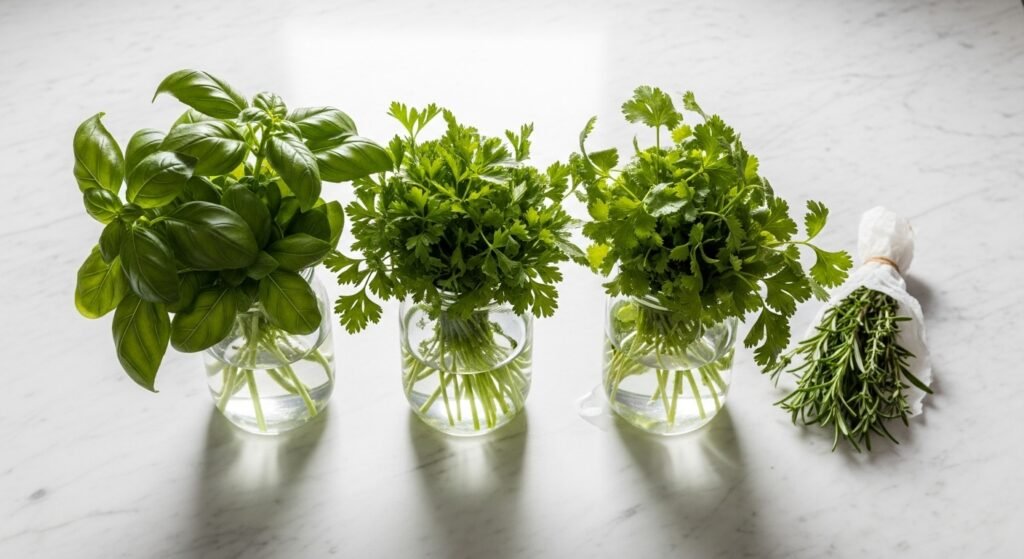
Fresh herbs look vibrant when you bring them home, but most die fast because people treat all herbs the same. That’s the first mistake. Herbs fall into two categories: soft herbs and woody herbs. Each needs a different storage method. If you ignore that, your herbs will wilt, turn brown, rot, or lose flavor within days. If you handle them properly, they easily last 1–3 weeks.
Know Your Herb Types
Before storage, classify your herbs. This step matters more than anything else.
Soft, Delicate Herbs
These herbs behave like flowers and need hydration.
Basil
Cilantro
Parsley
Mint
Dill
Chives
Tarragon
Woody, Hardy Herbs
These herbs behave like evergreen branches and hate excess moisture.
Rosemary
Thyme
Sage
Oregano
Marjoram
Lavender
If you mix the methods, you ruin them. For example, keeping rosemary in water will make it turn slimy. Storing basil in the fridge kills it. You must match the method to the herb.
Best Method for Soft Herbs: The Herb Bouquet Technique
Soft herbs die from dehydration. Treat them like cut flowers.
Step 1: Trim the Stems
Cut 1–2 cm from the bottom. This helps them drink water.
Step 2: Place in a Jar of Fresh Water
Fill a jar halfway. Put the herbs in gently.
Step 3: Cover With a Loose Plastic Bag
This traps humidity, prevents drying, and keeps oxygen flow.
Step 4: Refrigerate (Except Basil)
Cilantro, parsley, dill, mint — all thrive in the fridge.
Step 5: Change the Water Every 2–3 Days
If the water turns cloudy, bacteria will kill the herbs.
Why Basil Is Different
Basil is tropical. Cold destroys it. Keep basil on the counter in room temperature water, away from sunlight. It lasts 1–2 weeks like this.
Best Method for Woody Herbs: The Dry Wrap Method
Woody herbs rot if you put them in jars of water. They prefer low moisture and cold airflow.
Step 1: Wash Only If Necessary
If dirty, rinse quickly and pat fully dry.
Step 2: Wrap in Dry Paper Towel
This absorbs extra moisture.
Step 3: Place in an Airtight Container
You can use:
Zip bag
Glass airtight box
Silicone storage bag
Step 4: Refrigerate
Woody herbs easily stay fresh 2–3 weeks using this method.
The Biggest Mistake People Make
Storing all herbs together.
Don’t mix herbs in one container.
Don’t store basil with mint.
Don’t store rosemary with parsley.
Moisture levels differ. Airflow needs differ. Temperature tolerance differs.
How to Store Washed Herbs Correctly
If you wash herbs before storage, you introduce moisture — great for bacteria.
Follow This Rule:
Extra water kills woody herbs but helps soft herbs only if they can breathe.
Soft herbs: Wash → Dry → Store in jar with water
Woody herbs: Wash → Dry completely → Store wrapped
If water drips, you create mold. Don’t skip drying.
How to Keep Herbs Alive Longer With the Glass Jar Method
This advanced version keeps herbs green for over 2–3 weeks.
For Soft Herbs:
Use a tall glass jar with a tight lid.
Put herbs in water.
Close lid.
Store upright in the fridge.
This traps humidity and blocks oxygen from drying the leaves.
For Woody Herbs:
Skip the water.
Just place wrapped herbs in the jar.
Seal tight.
Fridge.
This extends their lifespan dramatically.
Storing Herbs in the Freezer (Long-Term Option)
If you want herbs to last 6–12 months, use freezing.
Method 1: Freeze Whole Leaves
Best for hardy herbs:
Rosemary
Thyme
Sage
Steps:
Spread leaves on a tray
Freeze separately
Transfer to airtight freezer bag
Use directly in soups, marinades, roasting
Method 2: Freeze in Oil (Ice Cube Method)
Best for soft herbs:
Parsley
Cilantro
Basil
Mint
Dill
Steps:
Chop herbs
Put in ice cube tray
Fill with olive oil
Freeze
Pop out cubes
Use for cooking, sautéing, sauces
Freezing in water is fine, but freezing in oil keeps flavor stronger.
Avoid These Common Herb-Killing Habits
If your herbs die fast, you’re likely doing one of these:
Putting Basil in the Fridge
This is wrong. Cold ruins it.
Washing and Storing Wet
Wet leaves rot faster.
Storing Herbs Near the Back of the Fridge
Cold spots freeze herbs. Frozen herbs turn black and mushy.
Storing in Sealed Plastic Without Airflow
Soft herbs suffocate and get slimy.
Letting Leaves Touch the Water
Only stems should be in water. Leaves in water rot instantly.
Not Changing Water
Stagnant water = bacteria factory.
If you’re doing any of these, fix it immediately.
How to Revive Wilting Herbs
If your herbs look limp, you can bring them back.
Soft Herbs:
Trim stems
Place in ice-cold water
Wait 15–20 minutes
Leaves perk up like new
Woody Herbs:
Sprinkle water lightly
Wrap in dry towel
Chill 1 hour
They regain structure
This trick works surprisingly well.
When to Wash Herbs
Don’t wash herbs until right before use, unless they’re visibly dirty.
Why
Washing increases moisture and bacteria growth.
Moisture shortens lifespan.
Drying herbs takes time.
Wet leaves stick together and rot.
If herbs are dusty or muddy, wash and dry properly before storing.
Proper Drying Technique
To keep herbs alive, drying must be done properly.
Lay herbs on clean towel
Pat dry — do not rub
Air dry for 10–15 minutes
Soft herbs need at least 80% dryness.
Woody herbs must be 100% dry.
Keep Herbs Alive Longer With These Extra Hacks
These additional techniques increase the lifespan dramatically.
Use a Herb Keeper
It’s a special container with a water reservoir.
Works best for cilantro, parsley, dill.
Extends life up to 3 weeks.
Add Ventilation Holes
If storing in a bag, poke tiny holes to allow airflow.
Refrigerate at the Right Temperature
Ideal fridge temperature: 3–5°C.
Too cold = freezing
Too warm = wilting
Remove Damaged Leaves
One rotten leaf spreads decay fast.
Check herbs every 2–3 days and remove damaged pieces.
Don’t Store Near Ethylene-Producing Fruits
Herbs are sensitive to ethylene gas.
Keep them away from:
Apples
Bananas
Avocados
Tomatoes
Ethylene speeds up aging and decay.
How to Keep Potted Herbs Alive Indoors
If you buy potted herbs like basil or mint, they often die fast because supermarket pots are overcrowded and root-bound.
Repot Immediately
Move herbs into a bigger pot with fresh soil.
Use Well-Draining Soil
Soggy soil kills herbs.
Give Proper Sunlight
Basil needs 6+ hours
Mint tolerates partial shade
Rosemary loves bright, direct sunlight
Water Properly
Most beginners overwater.
Water when the top soil feels dry.
Never leave water sitting in trays.
Trim Regularly
Cutting encourages new growth and keeps plants alive longer.
How Long Each Herb Lasts When Stored Properly
Soft herbs (refrigerator water method):
Cilantro: 2 weeks
Parsley: 3 weeks
Dill: 1 week
Mint: 2 weeks
Chives: 1 week
Tarragon: 10 days
Basil (room temperature): 1–2 weeks
Woody herbs (dry-wrap refrigeration):
Rosemary: 3–4 weeks
Thyme: 3 weeks
Sage: 2 weeks
Oregano: 2–3 weeks
Marjoram: 2 weeks
If your herbs die earlier than this, you’re making one of the mistakes listed earlier.
Why These Methods Actually Work
This isn’t random tradition — there’s logic behind every storage method.
Soft herbs lose water rapidly because of thin leaves.
Solution: Keep them hydrated like flowers.
Woody herbs contain natural oils and tough fibers.
Solution: Keep them dry and cool.
Basil is tropical.
Solution: Keep it warm and humid.
Moisture control + temperature control = long herb life.
Once you understand this, keeping herbs alive becomes effortless.
Final Expert Tips
If you want your herbs to stay vibrant and usable for maximum time, stick to these rules:
Treat soft and woody herbs differently.
Keep basil out of the fridge.
Avoid moisture for woody herbs.
Use clean jars and containers.
Change water frequently.
Cut stems like flowers.
Dry herbs properly before storage.
Check herbs every few days.
These simple habits easily double or triple the life of your herbs.