Easy Ways to Keep Brown Sugar Soft Always
How to Keep Brown Sugar Soft
Introduction: Why Brown Sugar Turns Hard So Quickly
Brown sugar seems soft and perfect when you open the packet, and then suddenly it turns into a rock. This isn’t magic—it’s moisture loss. Brown sugar contains molasses, and when the molasses dries out, the sugar clumps and hardens. Most people store brown sugar lazily in its original packaging or leave it exposed to air, then complain when it becomes unusable. If you want to keep brown sugar soft, you need to stop letting air steal its moisture. The solution is simple: store it properly, add controlled moisture, and prevent dryness. Let’s break it down without sugarcoating anything.
1. Understand Why Brown Sugar Hardens
If you don’t understand the basic reason, you’ll keep repeating the same mistake.
Brown sugar hardens because:
- It’s exposed to air
- It loses moisture from molasses
- It’s stored in a warm or dry place
- It’s left open in non-airtight packaging
- It’s stored in the fridge (big mistake)
Brown sugar needs moisture to stay soft. Lose that moisture, and you get bricks.
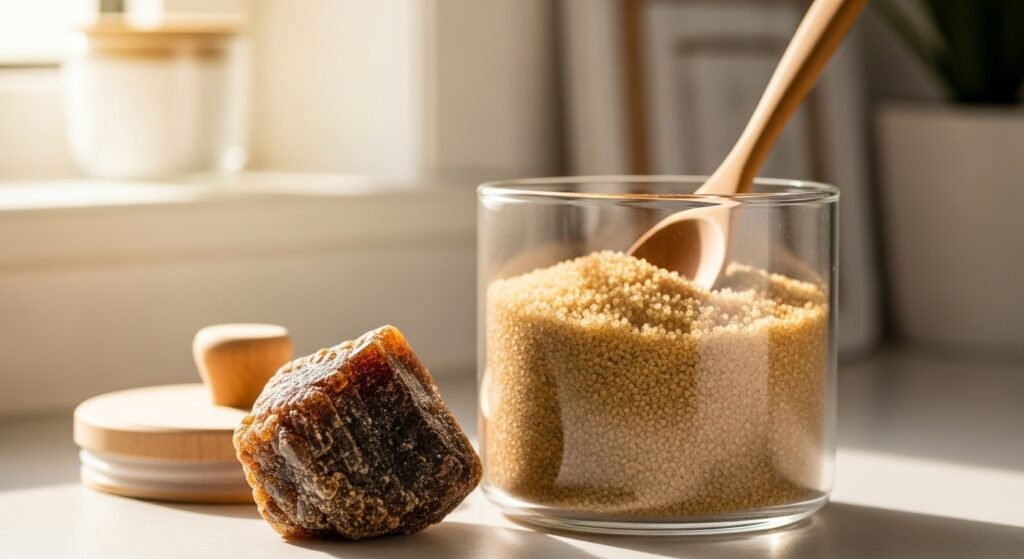
2. Use an Airtight Container—The Only Non-Negotiable Step
Stopping air exposure is the number one rule. If you skip this, everything else is pointless.
Why airtight matters
- Locks in molasses moisture
- Prevents air from drying sugar
- Stops lumps from forming
- Keeps insects and odors out
Glass or BPA-free plastic works. Thin plastic bags or paper packaging won’t cut it.
Smart tip
Use a container just big enough for the quantity. The more empty air inside, the faster it dries.
3. Keep a Moisture Keeper Inside the Container
Even airtight containers sometimes lose moisture over time. Adding a moisture keeper inside the box prevents hardening from the start.
Best options:
Brown sugar saver disk
A small terra-cotta clay disk that you soak in water for 15 minutes and place inside the container. It slowly releases moisture and keeps sugar soft for months.
Marshmallows
Sounds funny, but it works. Two marshmallows in the container keep sugar soft.
Slice of bread
Bread releases moisture gradually. Replace every couple of weeks.
Apple slices
They work but need to be changed frequently to prevent mold. Use only if you’re desperate.
4. Store It at Room Temperature Only
Putting brown sugar in the fridge is a guaranteed way to ruin it. The refrigerator environment is cold and dry, which pulls moisture out quickly.
Correct storage conditions:
- Cool (not cold)
- Dry
- Dark
- Room temperature
Avoid storing near heat sources like stoves or ovens, since heat dries it out too.
5. Break Up Clumps Immediately
If you see small clumps forming, don’t ignore them. That’s the first sign your sugar is drying out.
Use a spoon to break the clumps right away. This allows the molasses to redistribute. Leave clumps untouched, and they turn into rocks.
6. How to Soften Hardened Brown Sugar
If your sugar is already rock-hard, don’t toss it. You can fix it in minutes—or overnight—depending on the method.
Quick Softening Methods (for immediate use)
Microwave method (30 seconds)
- Put the sugar in a microwave-safe bowl
- Place a damp (not wet) paper towel on top
- Microwave in 20–30 second bursts
- Break it apart with a spoon
Be careful—too much heat melts sugar.
Heatproof bowl + boiling water method
- Put hardened sugar in a bowl
- Place bowl inside a larger bowl of hot water
- Let steam loosen the clumps
- Break apart with a fork
Works well when microwaves aren’t an option.
Overnight Softening Methods (better long-term texture)
Moist bread
- Put a slice of bread inside the container
- Close airtight
- Leave for 12–24 hours
- Remove bread once sugar softens
Apple slice
- Use a thin slice
- Seal airtight
- Leave overnight
- Remove apple once softened
Terra-cotta brown sugar saver disk
- Soak disk
- Place inside container
- Leave 24 hours
- Sugar becomes perfectly soft again
This method keeps sugar soft the longest with the least effort.
7. Use Proper Portioning When Storing
Dumping the whole bag into a single large container doesn’t always work well. Instead:
- Store in smaller portions if you have a large quantity
- Keep each batch in separate airtight boxes
- Open only what you need
- Minimize repeated exposure to air
Every time you open the container, moisture escapes.
8. Avoid Common Mistakes That Make Brown Sugar Hard
People ruin brown sugar themselves without realizing it. Avoid these rookie mistakes:
Mistake 1: Keeping sugar in its original packet
Those bags aren’t airtight. Air sneaks in easily.
Mistake 2: Leaving the container half-filled
More air = faster drying.
Mistake 3: Storing it in the fridge
This is the fastest way to destroy the texture.
Mistake 4: Using a container with a loose lid
Even a small gap is enough to ruin the sugar.
Mistake 5: Ignoring early clumps
Small clumps grow into solid blocks.
9. For Long-Term Storage, Freeze Correctly
Freezing brown sugar is NOT harmful, but only if you do it right. The cold doesn’t damage sugar—air exposure does.
How to freeze properly:
- Place sugar in airtight freezer bags
- Press out all excess air
- Double-bag for extra protection
- Thaw at room temperature
- Break apart once thawed
Freezing doesn’t harden sugar; moisture escape does. With airtight packaging, freezing is a perfectly safe long-term option.
10. Maintain a Routine
If you want brown sugar soft all the time, you need a simple maintenance habit.
Every 2 weeks:
- Check for clumps
- Add or replace the bread/apple/marshmallows if needed
- Make sure the lid is tight
- Shake the container gently to redistribute moisture
This takes less than one minute and keeps sugar soft forever.
11. Prevent Insects and Contamination
Warm, moist environments attract insects. If your brown sugar isn’t stored properly, you’re inviting pantry pests.
Protection tips:
- Always use airtight containers
- Clean the container before refilling
- Store sugar away from flour or grains (they attract insects)
- Avoid storing near trash bins
Clean storage ensures your sugar stays both soft and safe.
12. How to Store Different Types of Brown Sugar
Not all brown sugars behave the same. Light and dark brown sugar need the same technique, but muscovado and jaggery require extra care.
Light brown sugar
Less molasses, dries a bit slower.
Dark brown sugar
More molasses, becomes sticky if too much moisture is added.
Muscovado sugar
Very high molasses content; absolutely needs airtight storage with a terra-cotta disk.
Jaggery powder
Absorbs moisture too quickly; store in cool, airtight containers to avoid clumping.
Conclusion: Keeping Brown Sugar Soft Is Easy—If You Stop Being Careless
Brown sugar turns hard only when you let air suck out its molasses moisture. If you’re serious about keeping it soft, the rules are simple: airtight storage, controlled moisture, and smart maintenance. You’re not dealing with a complicated ingredient—just one that needs proper handling. Once you follow these steps, you’ll never deal with brick-hard sugar again.