Fresh & Flavorful Greek Orzo Salad Recipe Guide
Introduction
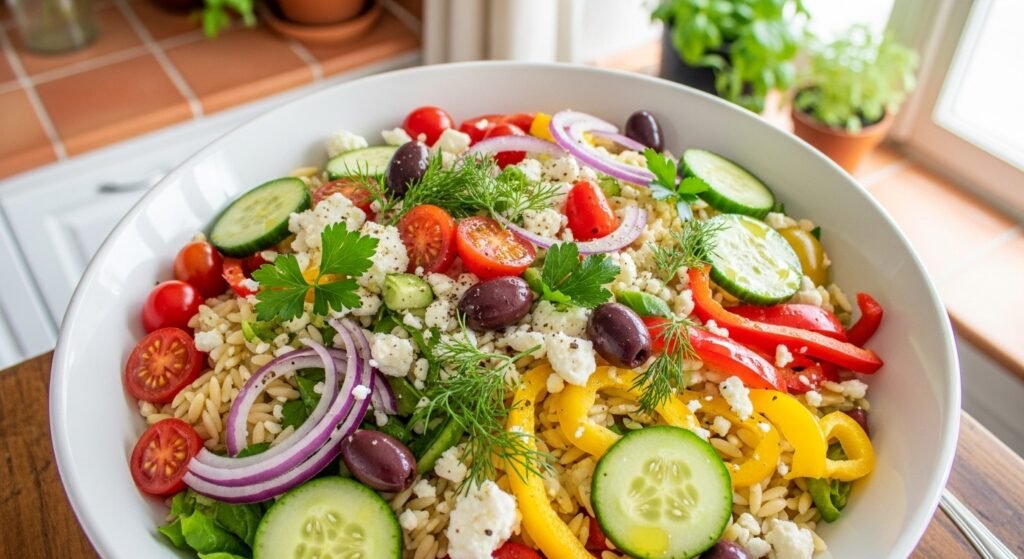
Greek orzo salad is one of those recipes that people think is complicated, but it’s actually stupidly simple once you understand the basics. It’s fresh, colorful, full of Mediterranean flavors, and works for literally any situation—meal prep, parties, weekday lunch, or a quick side dish.
The core idea is straightforward: take orzo (the tiny rice-shaped pasta), mix it with crisp vegetables, herbs, olives, cheese, and a punchy Greek-style dressing. The magic comes from balancing acidity, salt, crunch, and creaminess. If you mess up one of those, your salad becomes dull. Nail the balance, and you get a dish that tastes like you spent hours, even though it’s ridiculously quick.
This article breaks down everything—ingredients, techniques, variations, prep tips, mistakes to avoid, and how to store it properly. If you follow the steps logically, you can’t screw this up.
What Makes Orzo Perfect for This Salad?
Orzo looks like rice but cooks like pasta, meaning:
- It absorbs flavors better than most small pasta shapes.
- It stays tender without turning mushy if you treat it correctly.
- It mixes evenly with chopped vegetables.
- It chills well, making it great for cold salads.
The only time people ruin orzo is by overcooking it or letting it clump. Cook it al dente and rinse it under cold water for salad use. Don’t argue—just do it, unless you enjoy sticky pasta lumps.
Ingredients You Need
Here’s the combination that gives you a traditional, bold Greek taste:
For the Salad
- Orzo pasta
- Cherry tomatoes
- Cucumbers
- Red onion
- Kalamata olives
- Bell peppers
- Fresh parsley
- Fresh dill (optional but highly recommended)
- Feta cheese
For the Dressing
- Extra-virgin olive oil
- Lemon juice
- Red wine vinegar
- Garlic
- Dried oregano
- Dijon mustard
- Salt and black pepper
This ingredient list isn’t random. Every item has a purpose: lemon adds brightness, vinegar adds sharpness, garlic adds heat, feta adds creaminess, and herbs create freshness. Skip too many things and the salad becomes basic.
How to Cook Orzo Properly
If you screw up the orzo, the entire recipe collapses. Follow this:
- Use more water than you think you need. Orzo expands fast.
- Salt the water heavily.
- Cook until just al dente—7 to 9 minutes is the sweet spot.
- Drain immediately.
- Rinse under cold water to stop cooking and cool it fast.
- Toss with a little olive oil so it doesn’t stick.
People complain their salad turns mushy because they let the hot pasta sit in the strainer while preparing other things. Don’t multitask here. Handle the orzo first.
Chopping the Vegetables the Right Way
Uniform chopping matters more than you think. Big chunky pieces ruin the texture.
- Tomatoes: Halved or quartered depending on size
- Cucumber: Remove seeds if it’s watery
- Onion: Slice thin
- Bell pepper: Dice small
- Olives: Slice, don’t keep whole
- Herbs: Chop finely so they mix evenly
If you’re lazy while chopping, you’ll taste it. The salad will feel uneven and rough.
Mixing the Dressing
Greek dressing should be sharp, bold, and not sweet. Do it like this:
- Whisk olive oil, lemon juice, and red wine vinegar.
- Add minced garlic, oregano, mustard, salt, and pepper.
- Taste it. If it doesn’t punch you a bit, your acidity is weak.
- Adjust using lemon or vinegar, not sugar.
Never pour dressing on warm orzo or the oil separates badly. Always cool the orzo first.
Assembling the Greek Orzo Salad
Now that the components are ready, here’s the logical order:
- Add cooled orzo to a large bowl.
- Add all the chopped vegetables except the feta.
- Pour the dressing and toss well.
- Add herbs and mix again.
- Add the feta last so it doesn’t break down too much.
- Chill for at least 20–30 minutes before serving.
Letting it rest isn’t optional. The flavors need time to settle.
Why This Salad Works for Meal Prep
If you think salads don’t last long, this one proves you wrong. Greek orzo salad stays fresh for 3–4 days because:
- Orzo doesn’t wilt like lettuce.
- The dressing is oil-based, so it preserves well.
- Feta holds its structure.
- The acidity stops vegetables from tasting stale.
Just don’t add cucumbers in advance if you store it long. They release water and dilute the flavor.
Flavor Variations You Can Try
If you stick strictly to the basic version forever, you’re limiting yourself. Here are variations that actually make sense:
Mediterranean Version
Add:
- Artichokes
- Sun-dried tomatoes
- Roasted red peppers
Protein-Packed Version
Add:
- Grilled chicken
- Sautéed shrimp
- Chickpeas
Green Herb Explosion
Add:
- Mint
- Basil
- Extra dill
Creamier Texture
Add:
- A spoon of Greek yogurt to the dressing
- More feta
Zesty and Bold
Add:
- Extra lemon zest
- Capers
These variations don’t break the identity of the dish. They just shift the personality.
Common Mistakes People Make
I’ll call them out straight:
Overcooking the Orzo
If it’s mushy, start over. No fix.
Adding Dressing to Warm Pasta
This ruins the texture.
Too Many Wet Vegetables
Cucumber seeds, watery tomatoes, etc. Make sure to drain properly.
Using Cheap Olive Oil
If your oil tastes like nothing, your dressing will taste like nothing.
Skipping Herbs
Parsley and dill are non-negotiable for freshness.
Adding Feta Too Early
It crumbles into paste.
If you avoid these mistakes, you’re already ahead of most people.
How to Serve Greek Orzo Salad
You can serve it as:
- A chilled side dish
- A main course with protein
- A picnic or potluck dish
- A meal prep lunch
- A base for grilled foods like chicken or shrimp
You can also keep a batch in the fridge and add toppings daily for variety.
How to Store It Correctly
This isn’t rocket science, but people still get it wrong.
- Store in an airtight container.
- Add extra drizzle of olive oil before refrigerating.
- Keep herbs fresh by adding a little extra after chilling.
- If it looks dry the next day, splash lemon juice and oil, then mix.
The salad only goes bad when people store it loosely or forget acidity.
Health Benefits Worth Knowing
This salad isn’t junk. It’s actually balanced:
- Olive oil: Healthy fats
- Vegetables: Fiber + micronutrients
- Herbs: Antioxidants
- Feta: Protein + calcium
- Orzo: Carbs for energy
It’s not “diet food,” but it’s clean and wholesome without effort.
Final Thoughts
Greek orzo salad is one of those recipes that gives you maximum payoff for minimal effort. The ingredients are cheap, the flavor is fresh, and the preparation is simple—but only if you follow the method correctly.
If you treat orzo right, chop evenly, use a bold dressing, and give the salad time to rest, you’ll end up with a dish that tastes restaurant-quality without needing any fancy tricks. If you cut corners, the salad will taste average, and that’s on you.