How to Make the Smoothest Buttercream Frosting
Buttercream Frosting Recipe
Why Buttercream Frosting Is the Most Reliable Choice
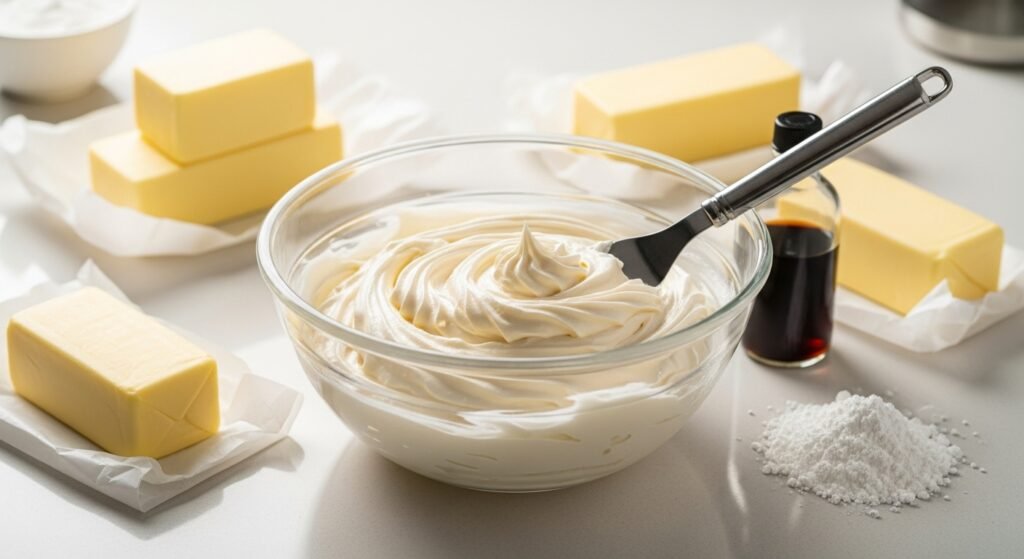
Buttercream frosting is the gold standard in the baking world because it’s versatile, stable, easy to make, and pairs perfectly with almost any cake or cupcake. You can spread it smoothly, pipe intricate designs, color it, flavor it, and store it for days without losing quality. Most beginners mess up buttercream because they underestimate how temperature, butter quality, and mixing technique affect the texture. If you understand the fundamentals, you can produce bakery-level frosting every single time.
What Buttercream Actually Is
Buttercream is a sweet, whipped mixture of butter and sugar, sometimes enhanced with cream, milk, or flavor extract. The goal is to create a light, airy, creamy texture that can hold its shape. There are several types of buttercream—American, Swiss, Italian, French, and German—but the most common and practical version for home baking is American buttercream. It requires no special equipment, no cooked sugar syrup, and no complicated steps.
The Core Ingredients That Make or Break the Frosting
Don’t overcomplicate buttercream. You only need a few ingredients, but each one matters.
Butter
Powdered sugar
Vanilla extract
A liquid (milk, cream, or heavy cream)
Salt (optional but recommended)
Most people ruin buttercream by choosing poor-quality butter or using butter that’s too hard or too soft. Room-temperature butter doesn’t mean soft and melting. It should be pliable enough to press with your fingertip but still hold its shape.
Powdered sugar should be fine, not coarse. If the sugar has lumps, you need to sift it or those lumps will never disappear, no matter how long you mix.
Salt helps balance sweetness, especially in American buttercream, which can become overly sweet if you don’t control it.
Choosing the Right Type of Butter
You’re not going to get premium frosting with cheap, low-fat butter. Choose high-fat, unsalted butter. Salted butter gives you inconsistent salt levels, and margarine destroys the texture completely. European-style butter with 82–85% fat gives the creamiest, richest result. If the butter is too cold, the frosting becomes chunky. If it’s too warm, it turns soupy. Temperature is everything.
The Best Buttercream Frosting Recipe
Here’s the direct, reliable recipe that works every single time.
Ingredients
1 cup (225g) unsalted butter, softened
4 cups (480g) powdered sugar, sifted
2–4 tbsp heavy cream or milk
1–2 tsp vanilla extract
1 pinch salt
Instructions
Beat the butter for 3–5 minutes until pale and fluffy.
Gradually add powdered sugar, one cup at a time, mixing on low speed to avoid sugar clouds.
Add vanilla extract and a pinch of salt.
Add cream slowly to achieve desired consistency.
Whip on high speed for 2–3 minutes until light, smooth, and airy.
That is the complete process. No shortcuts, no nonsense. If you try to rush, you’ll end up with gritty or dense frosting.
Understanding Buttercream Texture
The correct texture of buttercream is smooth, airy, and spreadable—not greasy, not runny, and not dry. The consistency depends on:
Butter temperature
Mixing speed
Amount of powdered sugar
Amount of liquid added
Room temperature
If your frosting feels grainy, your powdered sugar was either coarse or not mixed long enough. If it feels greasy, your butter was too warm. If it’s too thick, add milk. If it’s too thin, add more powdered sugar.
Why Whipping Time Matters
Most people barely mix their buttercream. That’s a guaranteed mistake. Buttercream needs air. When you whip the butter for several minutes before adding sugar, you incorporate air that makes the final frosting light instead of dense. After adding the powdered sugar, whipping again ensures everything combines smoothly. Skipping the whipping stage gives you a heavy, oily frosting.
How to Fix Common Buttercream Problems
Buttercream issues are predictable and easy to fix:
Frosting Is Too Thick
Add 1 tsp of cream at a time. Mix until smooth.
Frosting Is Too Runny
Add 2–3 tbsp powdered sugar at a time. Keep mixing.
Frosting Looks Curdy
Butter was too cold. Keep mixing—it will eventually smooth out.
Frosting Is Soupy
Butter was too warm. Refrigerate for 10–15 minutes, then whip again.
Frosting Is Too Sweet
Add a tiny pinch of salt or more butter. You can also add a spoon of lemon juice to cut the sweetness.
These fixes work every time if you don’t panic.
Flavor Variations You Can Make Easily
Once you understand the base recipe, you can turn it into dozens of flavors. Here are the most practical and popular ones.
Chocolate Buttercream
Add cocoa powder or melted cooled chocolate.
Powdered cocoa makes it lighter; melted chocolate makes it richer.
Lemon Buttercream
Add lemon zest and lemon juice.
Perfect for spring cakes or fruit cupcakes.
Strawberry or Berry Buttercream
Blend freeze-dried berries into powder and mix into the frosting.
Avoid fresh berries—they introduce water and ruin consistency.
Coffee Buttercream
Add instant espresso powder dissolved in 1–2 tbsp cream.
Caramel Buttercream
Mix in store-bought or homemade caramel sauce.
Make sure the caramel is cooled before mixing.
Coconut Buttercream
Add coconut cream and a bit of shredded coconut for texture.
Mint Buttercream
Add peppermint extract and optional green food coloring.
Each flavor changes the personality of the frosting and works for specific cake styles.
Coloring Your Buttercream the Right Way
If you want bold colors, liquid food coloring is useless. It thins the frosting and gives uneven pigment. Use gel or paste-based food coloring. They deliver deep colors without messing up consistency. For dark shades like red or black, you need significantly more coloring and resting time to deepen the tone. Leaving colored buttercream to sit for 30–60 minutes improves the final color.
Using Buttercream for Piping and Decorating
American buttercream is ideal for piping rosettes, borders, flowers, and tall swirls on cupcakes. The key for piping is the consistency—slightly thicker than spreading consistency. If it’s too soft, the shapes collapse. If it’s too stiff, it cracks. Chill the piping-ready frosting for 5–10 minutes if your kitchen is warm. Use sturdy piping bags and metal tips for cleaner designs.
How to Frost a Cake Properly
Frosting a cake with buttercream is not complicated if you follow the correct sequence:
Start with a crumb coat (a thin layer of frosting).
Chill the cake for 15–20 minutes.
Apply the final thick layer of frosting.
Smooth it using an offset spatula or bench scraper.
Rotate the cake on a turntable for even sides.
Skipping the crumb coat will trap crumbs in your frosting and give you a messy finish. If you want clean, professional edges, keep your spatula warm by dipping it in hot water, wiping it, and smoothing the frosting again.
Storing Buttercream Frosting
Buttercream is stable and stores extremely well. You can refrigerate it for up to a week or freeze it for up to two months. When ready to use, bring it to room temperature and re-whip it for a few minutes. If you try to use cold buttercream straight from the fridge, it will be hard, grainy, and nearly impossible to spread.
How to Scale the Recipe
If you need more frosting for layer cakes, adjust the recipe like this:
For a 2-layer 8-inch cake:
Double the recipe.
For a 3-layer tall cake:
Triple the recipe.
For 12 cupcakes:
Half a batch is enough for tall swirls.
A full batch gives extremely generous piping.
Don’t guess. Measure based on your project.
American vs. Swiss vs. Italian Buttercream
You should understand the differences so you know which type fits your project.
American Buttercream
Sweet, stable, easiest to make.
Best for casual cakes, piping, and beginners.
Swiss Meringue Buttercream
Silky, less sweet, made with melted sugar and egg whites.
Great for weddings and premium cakes.
More sensitive to temperature.
Italian Meringue Buttercream
Very stable, uses hot sugar syrup.
Ideal for warm climates or tall decorations.
More advanced technique.
French/German Buttercream
Richer, egg-based versions used for elegant pastries.
Not ideal for outdoor events (melts faster).
Most people stick to American buttercream because it’s fast, versatile, and delivers consistent results.
Pairing Buttercream With Different Cakes
Buttercream pairs well with almost every cake, but some combinations work exceptionally well:
Vanilla cake with chocolate buttercream
Chocolate cake with vanilla or coffee buttercream
Red velvet cake with cream cheese–style buttercream
Lemon cake with lemon buttercream
Carrot cake with cinnamon buttercream
Coconut cake with coconut buttercream
Funfetti cake with simple vanilla buttercream
The key is balancing sweetness and flavor intensity.
Why Temperature Control Matters
The biggest enemy of buttercream is heat. A warm kitchen can cause frosting to melt or loosen. A cold kitchen can make it hard and chunky. Ideal working temperature is around 20–22°C (68–72°F). If your hands warm the piping bag too quickly, use two bags: one filled with frosting and another around it as insulation.
Using Buttercream for Layering and Filling
Buttercream makes excellent cake filling because it stays stable and holds its shape. For layered cakes, create a buttercream dam around the edges before adding filling like jam, compote, or caramel. This prevents leakage and keeps layers clean and sharp.
Practical Tips for Perfect Buttercream
Here are the small but crucial details that many people ignore:
Always sift powdered sugar.
Never use melted butter.
Whip the butter long enough.
Add liquid slowly.
Use gel coloring instead of liquid.
Taste and adjust salt.
Store properly to avoid crusting.
Work in a cool environment.
These details separate professional-quality frosting from amateur results.
Final Thoughts
A buttercream frosting recipe may look simple on paper, but real success comes from understanding technique, temperature, and ingredient quality. If you follow the right steps—whipping the butter thoroughly, adding sugar gradually, monitoring consistency, and balancing sweetness—you’ll end up with frosting that’s smooth, stable, and worthy of any bakery display. Buttercream is flexible, forgiving, and customizable, making it the most practical and essential frosting for both beginners and experienced bakers. Once you master it, you can flavor it, color it, pipe it, and decorate with confidence.