Ultimate Breakfast Charcuterie Board Guide
Introduction to a Breakfast Charcuterie Board
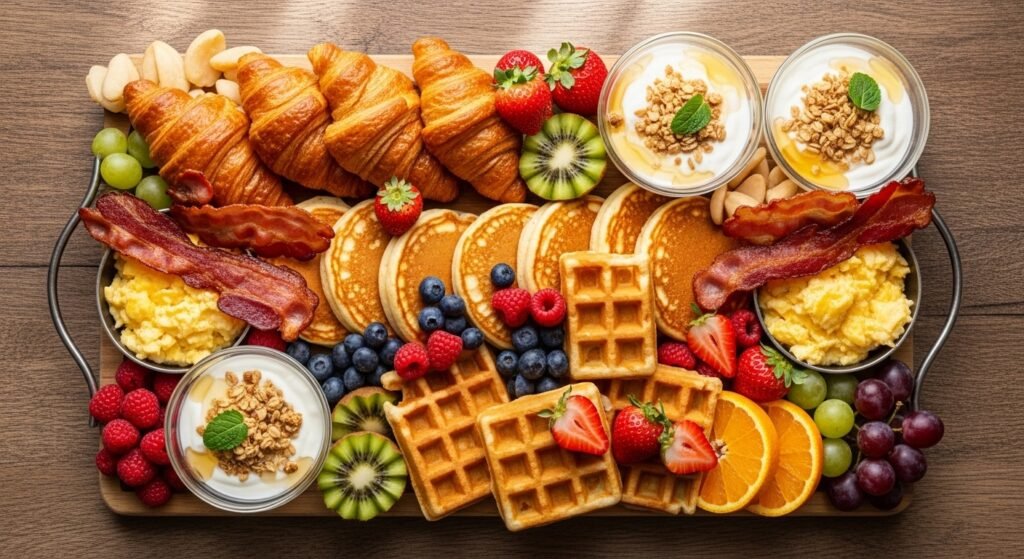
A breakfast charcuterie board is a creative and visually appealing way to serve a complete morning meal. Instead of preparing individual plates, you arrange a variety of breakfast foods on one large platter, allowing everyone to choose what they like. It’s a smart option for family gatherings, weekend brunches, or even everyday mornings if you want something simple but impressive.
The concept is straightforward: combine proteins, fruits, breads, spreads, sweets, and drinks into a balanced layout. Think of it as a customizable buffet on a single board. It saves time, reduces cooking stress, and still looks premium. If you want a breakfast that feels special without complicated steps, this board delivers.
Why a Breakfast Charcuterie Board Works
A breakfast charcuterie board works for one main reason: flexibility. It adapts to different tastes, diets, and budgets. If someone prefers sweet foods, they can pick pastries and fruits. If others want protein, they can go for eggs and bacon. No one feels restricted.
Another benefit is efficiency. You can prepare many items in advance — fruits washed, spreads ready, breads sliced. In the morning, you only assemble. It also scales easily. Making a board for two? Use a small wooden tray. Making it for ten? Use a large table-style board.
The board also encourages mindful eating. Instead of heavy portions, people pick small bites. This makes the meal more enjoyable and less wasteful.
Key Components of a Balanced Breakfast Board
A strong breakfast charcuterie board has a mix of five essential elements. If you hit all five, the board never feels incomplete.
1. Proteins
Proteins are the anchor of any morning board. They add nutrition and keep people full.
Best options:
- Scrambled eggs or mini omelets
- Hard-boiled eggs
- Bacon or turkey bacon
- Sausages or chicken sausages
- Smoked salmon or tuna
- Greek yogurt bowls
- Cottage cheese
Keep the protein choices simple. Avoid items that get soggy quickly or become greasy on the board.
2. Fruits
Fruits add freshness, color, and natural sweetness. They also balance the heavy items.
Best choices:
- Strawberries
- Blueberries
- Grapes
- Apples (sliced with lemon to prevent browning)
- Oranges or mandarins
- Kiwi
- Pineapple cubes
Avoid fruits that leak too much water, like watermelon slices, unless placed in a small bowl.
3. Breads and Carbs
Carbs provide the base for spreads, eggs, and toppings.
Popular options:
- Mini pancakes
- Waffles (cut into small quarters)
- Toast bites
- Croissants
- Bagels (mini or sliced)
- Muffins
- Granola cups
These items add structure and make the board feel complete.
4. Spreads and Toppings
These bring flavor and variety.
Examples:
- Butter
- Cream cheese
- Nutella
- Peanut butter
- Honey
- Maple syrup
- Fruit jams
- Hummus
- Avocado mash
Use small bowls to keep spreads neat and accessible.
5. Sweet Bites
A breakfast board always feels premium when you add a few sweet extras.
Best sweet additions:
- Chocolate chips
- Mini donuts
- Cinnamon rolls
- Yogurt-coated nuts
- Brownie bites
- Dark chocolate squares
These should be placed away from hot items to avoid melting.
How to Build a Breakfast Charcuterie Board
You don’t need artistic skills — just follow a logical layering method.
Step 1: Choose Your Board
Use one of these:
- Wooden charcuterie board
- Marble slab
- Large serving tray
- Baking sheet lined with parchment
- Small boards if making personal servings
Bigger boards give more visual impact, but smaller ones work if you’re serving two people.
Step 2: Place the Bowls First
Start by placing bowls for:
- Spreads
- Yogurt
- Syrups
- Nuts
- Any juicy fruits
Bowls create structure. They split the board into sections so the food doesn’t mix randomly.
Step 3: Add the Proteins
Place proteins next because they need space and should feel accessible. Keep hot proteins in a warm dish or add them last if serving immediately.
Step 4: Add Breads and Carbs
Arrange them near the spreads. Stack or fan them out so they look full.
Step 5: Add Fruits for Color
Add fruits in clusters. Color balance matters: red berries near neutral breads, green kiwi near eggs, etc.
Step 6: Add Sweet and Crunchy Items
Use them to fill gaps and edges. They make the board look abundant.
Step 7: Add Garnish
Simple garnishes elevate presentation:
- Mint leaves
- Lemon wedges
- Powdered sugar dust
- Nuts scattered lightly
Don’t overdecorate — keep it clean.
Creative Variations of a Breakfast Charcuterie Board
If you want to stand out, explore variations based on themes.
1. Healthy Breakfast Board
- Greek yogurt bowls
- Nuts and seeds
- Avocado slices
- Whole-grain bread
- Fresh berries
- Cottage cheese
- Green apples
This version is ideal for fitness-focused meals.
2. Kids’ Breakfast Board
- Mini pancakes
- M&M toppings
- Fruit skewers
- Peanut butter dip
- Bite-sized muffins
- Fun-shaped waffles
Bright colors make kids excited to eat.
3. High-Protein Board
- Scrambled eggs
- Turkey bacon
- Greek yogurt
- Cottage cheese
- Protein pancakes
- Almond butter
Useful for gym days or anyone following a high-protein diet.
4. Luxury Brunch Board
- Smoked salmon
- Cream cheese
- Capers
- Croissants
- Imported cheeses
- Honeycomb
- Blueberries
- Pomegranate seeds
This version looks extravagant with minimal effort.
5. Vegetarian Breakfast Board
- Sautéed mushrooms
- Avocado mash
- Paneer cubes
- Hummus
- Paratha bites
- Fruit bowls
- Yogurt parfaits
A very balanced, colorful option.
6. Indian-Style Breakfast Board
If you want something culturally relevant:
- Mini idlis
- Dosa triangles
- Chutney bowls
- Upma portions
- Cut fruits
- Masala chai in small cups
- Paratha rolls
This version tastes familiar but looks modern.
Tips to Make Your Board Look Professional
Most boards fail because people just dump items randomly. Follow these rules to get clean, high-quality results.
1. Use Odd Numbers
For clusters of items, use 3, 5, or 7. Odd numbers look more natural.
2. Fill Every Gap
A good board looks full — empty gaps make it look cheap.
3. Add Height
Stack pancakes, layer fruits, or use bowls to add dimension.
4. Keep Similar Items Together
Fruits with fruits, breads with breads. This makes it easy to choose.
5. Use Contrast
Place bright items beside neutral ones. This makes the board more attractive visually.
6. Serve Immediately
Hot items cool fast. Assemble the cold foods first and add hot items just before serving.
Common Mistakes to Avoid
People overcomplicate breakfast boards. Here are mistakes you should avoid:
1. Mixing Wet and Dry Items
Never place juicy fruits directly next to dry bread.
2. Overloading Too Many Items
A board packed with 20 different foods looks messy. Stick to 10–14 items.
3. Using Uneven Sizes
Cut everything into bite-sized, similar sizes so it looks intentional.
4. Forgetting Utensils
Add:
- Serving spoons
- Tongs
- Small forks
Without these, your board becomes chaotic.
5. Making Everything Fresh on the Spot
Prep half the items the night before including fruits, spreads, and breads.
Perfect Drinks to Serve With a Breakfast Charcuterie Board
Complete the experience with drinks that complement the board.
Best options:
- Fresh orange juice
- Cold coffee
- Hot chocolate
- Masala chai
- Smoothies
- Lemon mint water
- Iced tea
You don’t need many — just one or two.
How to Store Leftovers Efficiently
If food remains after serving, store each category separately:
- Fruits in airtight containers
- Breads in foil or zip bags
- Eggs and proteins in the fridge
- Spreads covered tightly
Do not store everything together on the board; it ruins the textures.
Final Thoughts
A breakfast charcuterie board isn’t complicated — it’s smart. It saves time, looks premium, and satisfies everyone at the table. You can keep it simple with basic fruits and breads or make it feel luxurious with salmon and pastries. Once you master the basic structure — bowls first, proteins next, fruits for color, sweets for finishing — you can create endless variations.