Top Hack to Clean Cast Iron Fast Without Soap
Cleaning Cast Iron Without Soap
Why Cast Iron Needs a Different Cleaning Approach
If you’re using cast iron like normal cookware, you’re doing it wrong. Cast iron isn’t stainless steel, and treating it that way destroys the seasoning, ruins the nonstick surface, and shortens its life. The biggest mistake? Scrubbing it with soap every time. Sure, mild soap occasionally won’t kill it, but constantly using it is pointless when better methods exist. If you want to clean cast iron properly without damaging anything, you need smarter, faster solutions. And yes—the best hacks have zero soap.
What Makes Cast Iron Tricky to Clean
Before you even think about cleaning hacks, understand why cast iron behaves differently.
1. It’s porous.
It absorbs oil, builds seasoning, and creates that natural nonstick layer over time. Soap breaks this down if overused.
2. It holds onto heat.
This helps with cooking but also helps with cleaning—warm iron reacts differently to food residue.
3. It rusts easily.
Water contact is your enemy. Leaving cast iron wet is the fastest way to destroy it.
Knowing this gives you an advantage: you stop doing things that ruin your pan and start doing things that keep it strong for years.
The Best Hack for Cleaning Cast Iron Without Soap: Salt Scrub Method
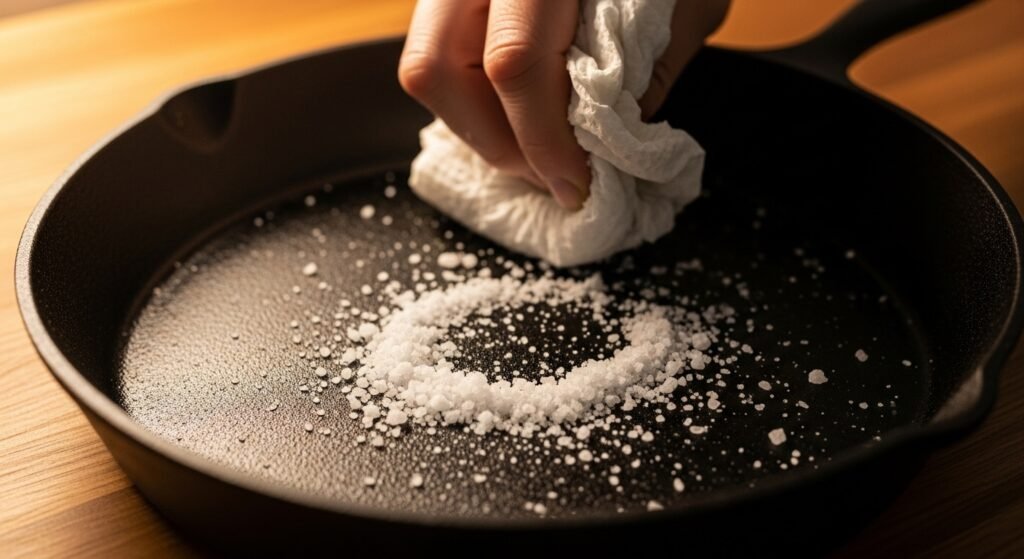
Forget fancy tools. Forget expensive cleaners. The simplest, strongest, and most effective hack is coarse salt + heat + paper towel. That’s it.
Why Salt Works So Well
- Acts like a natural abrasive
- Removes stuck food without stripping seasoning
- Safe, cheap, and always available
- Doesn’t scratch the surface
- Kills odors
Salt is basically sandpaper that won’t destroy your pan.
How to Do the Salt-Scrub Method (Step-by-Step)
Step 1: Heat the pan slightly
Warm pan = weaker food residue. Don’t make it blazing hot—just warm enough.
Step 2: Add a handful of coarse salt
Use kosher salt or sea salt for best results. Avoid fine salt; it’s too soft to scrub effectively.
Step 3: Scrub with a paper towel or dry cloth
Use circular motions. You’ll feel the residue coming off almost instantly. If you need more strength, use a wooden spoon or a silicone spatula.
Step 4: Wipe everything out
Once the residue lifts, wipe the pan clean. Discard the salty paste.
Step 5: Heat again to dry the pan
This prevents rust—don’t skip it.
Step 6: Oil the surface lightly
Use a tiny amount of oil. Not too much—you’re maintaining the seasoning, not frying oil inside the pan.
Salt is your friend here. It leaves the seasoning untouched while stripping away anything stuck.
Why This Is the No-Nonsense Best Hack
Let’s be brutally honest: most people ruin cast iron because they either overthink cleaning or underthink it.
The salt method works because:
- It doesn’t depend on expensive gear
- It’s fast—clean in under 3 minutes
- It preserves flavor and seasoning
- It prevents rust
- It never damages the pan
Every other hack is just a variation of the same logic.
When the Salt Hack Isn’t Enough: The Boiling Water Method
Sometimes food is welded onto the surface—especially eggs, cheese, or sugary sauces. When salt alone won’t cut it, this backup method works without soap.
Step 1: Add water to the pan
Just enough to cover the stuck parts.
Step 2: Bring the water to a boil
Boiling loosens the residue. It works because heat expands the metal and releases food particles.
Step 3: Scrape with a wooden spatula
Never use metal—it damages the seasoning.
Step 4: Dump the water and dry immediately
Never leave water sitting inside cast iron. It rusts fast.
Step 5: Apply a thin coat of oil
Always finish with oil. Think of it as moisturizing your pan.
The Potato and Salt Trick (For Burnt, Sticky, or Smelly Messes)
This one sounds odd, but it works better than half the marketed “cast iron cleaners.”
How to Use It
- Cut a potato in half
- Sprinkle coarse salt over the surface
- Scrub using the potato as if it’s a cleaning sponge
- The potato’s moisture + salt = natural abrasive paste
- Rinse quickly, dry completely, oil the pan
This combo removes odors, stuck food, and light rust patches. And yes, the potato gets destroyed—but so what? It’s cheap.
Cleaning Without Soap: What NOT to Do
People mess up cast iron more by doing stupid things than by forgetting to clean it. Avoid these mistakes completely.
Never Soak Cast Iron in Water
This is the fastest way to get rust. Cast iron hates water, especially prolonged exposure.
Don’t Use Dishwashers (Ever)
If you’re doing this, you’re killing your pan—simple.
Avoid Using Steel Wool Regularly
It strips seasoning. Only use steel wool when you’re intentionally restoring a pan.
Don’t Store It Wet or Greasy
Wet = rust
Too oily = sticky surface and bad seasoning
Dry and lightly oiled is the goal.
Never Leave Food Sitting Overnight
Tomato sauces, acidic foods, or oily foods break down seasoning while you sleep.
How to Maintain Cast Iron After Every Cleaning
Cleaning without soap is only half the game. The other half is keeping the seasoning intact so the pan improves over time.
1. Always Dry the Pan on Heat
Wiping isn’t enough. You need the heat to evaporate microscopic moisture.
2. Re-Oil Every Time
A thin coat restores the nonstick layer. Use:
- Flaxseed oil
- Canola oil
- Vegetable oil
- Grapeseed oil
Avoid olive oil—it gets sticky.
3. Store in a Dry Place
Humidity ruins cast iron. Don’t keep it under the sink or near damp areas.
4. Don’t Over-Oil
Too much oil creates a sticky surface that attracts dust, dirt, and food residue.
One drop goes a long way.
What to Do If Your Cast Iron Has Rust
Rust doesn’t mean your pan is dead. It just means you messed up somewhere. Here’s how to fix it without soap:
Step 1: Scrub with salt and a little water
Use a soft scrubber.
Step 2: Dry completely with heat
Step 3: Re-season the pan
Add a thin layer of oil and bake it upside down at 200°C (400°F) for 1 hour.
This resurrects most rusty pans easily.
Deep Cleaning Cast Iron Without Soap
If you’ve been abusing your pan, you might need a full reset.
How to Do It
- Heat the pan
- Scrub with salt
- Rinse quickly
- Heat to dry
- Oil the entire surface
- Bake in oven to rebuild seasoning
This transforms an old, sticky, beat-up pan into something usable again.
When You Should Use Soap
Here’s the truth: soap isn’t always evil. Use it occasionally only if:
- The pan smells weird
- You cooked something highly acidic
- There’s sticky residue that nothing else removes
But soap should be the exception, not the rule—and if you do use it once in a while, you must re-oil the pan immediately.
Why People Struggle With Cast Iron Cleaning
Most people fail because they expect cast iron to behave like Teflon. It won’t. It requires a simple but consistent routine.
Problems people cause:
- Using too much water
- Washing it like a normal pan
- Not drying or oiling
- Panicking about residue
A little residue is fine. Cast iron works better slightly oily.
Quick After-Cooking Routine That Always Works
If you want a straightforward, no-excuses method:
- While pan is still warm, scrape food with a wooden spatula
- Add coarse salt
- Scrub with paper towel
- Wipe clean
- Heat to dry
- Oil lightly
This takes 2–3 minutes, protects seasoning, and keeps your pan in top shape.
Final Verdict: Best Hack for Cleaning Cast Iron Without Soap
Let’s end this with the blunt truth:
Coarse salt is the smartest, fastest, and safest way to clean cast iron without soap.
It removes residue, protects seasoning, avoids rust, and works every single time. When salt isn’t enough, boiling water, potato-salt scrubs, and proper drying/oiling keep the pan in excellent condition for decades.