Best Low-Calorie Dark Chocolates to Enjoy Guilt-Free
The Smart Guide to Enjoying Chocolate Without the Guilt
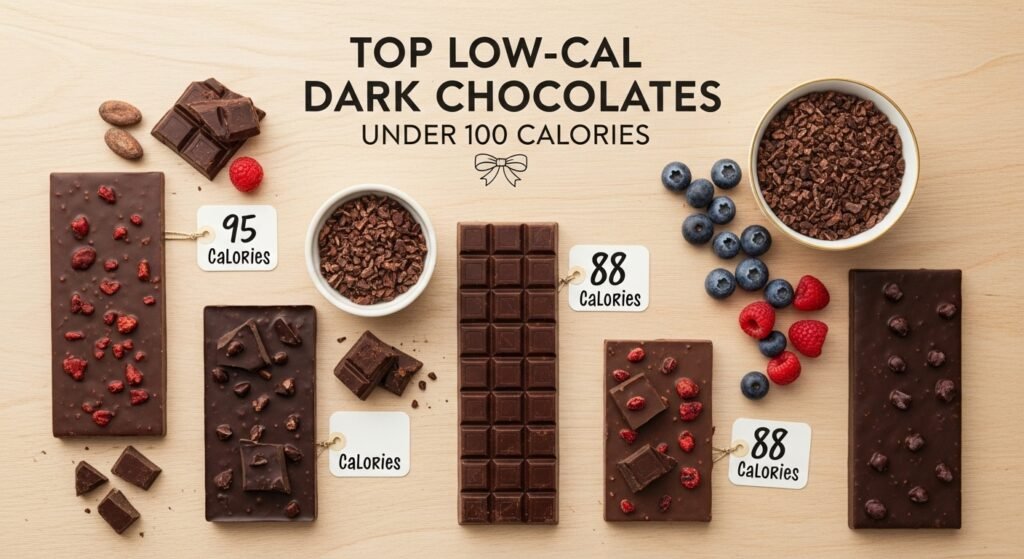
Low calorie dark chocolate sounds like a cheat code — a way to satisfy chocolate cravings without consuming 200–300 calories in a single bar. The good news is simple: dark chocolate can be low calorie if you pick the right type, the right cocoa percentage, and the right serving size. Most people get this wrong because they assume “dark chocolate” automatically means “healthy.” It doesn’t. You need to understand what actually makes dark chocolate low calorie and how to choose it without falling for marketing tricks.
This guide breaks down everything that matters. No sugarcoating. Just facts and practical advice.
Why Dark Chocolate Is Usually High in Calories
Dark chocolate becomes high calorie for one main reason: fat density. Cocoa butter is rich in calories, and even a small 30–40 gram bar can add up fast.
Here’s the harsh truth:
- Regular dark chocolate (70–85%) = 150–250 calories per 30g
- Extra dark chocolate (90%+) = 140–200 calories per 30g
- Milk chocolate = worse, usually 180–260 calories with more sugar
So yes, dark chocolate is “healthier” in antioxidants, but that doesn’t automatically make it low-calorie. That’s where people fool themselves.
What Actually Makes Dark Chocolate Low Calorie
Dark chocolate becomes low calorie only when these three things align:
- Cocoa percentage between 70–85%
High enough for nutrients, low enough for balanced calories. - Lower sugar content
Less sugar = fewer calories and a more stable blood sugar response. - Smaller serving sizes
A 10g to 15g piece is enough to satisfy cravings and keep calories around 50–80.
If a brand claims “low calorie” but loads the chocolate with fillers, sweeteners, or fat replacements, it’s not real chocolate anymore — it’s candy pretending to be healthy.
Calories Comparison: Regular vs Low Calorie Dark Chocolate
To help you understand the difference, here’s a simple comparison.
Regular Dark Chocolate (70–85%)
120–150 calories for 20g
180–250 calories for 35g
Low Calorie Dark Chocolate Options
50–70 calories for 10–12g
110–140 calories for 20g
Extremely Low Calorie Options (Artificially Sweetened)
40–60 calories for 15g
These use sweeteners instead of sugar and may reduce fat slightly.
The catch: some low-cal “diet chocolates” taste terrible. Quality matters more than extreme calorie cutting.
Ingredients That Keep Dark Chocolate Low Calorie
If you want truly low-calorie dark chocolate, look for these ingredients.
High Cocoa Solids (70–85%)
More cocoa, less sugar. Also more antioxidants. Perfect balance for lighter calories.
Minimal Sugar
2–5g sugar per serving is reasonable. Anything above 8–10g will push calories high.
Natural Sweeteners (Optional)
Stevia, monk fruit, or erythritol keeps sweetness without adding calories, but not everyone likes the taste.
Less Cocoa Butter
The more cocoa butter added, the higher the calories. Look for bars with:
- 10–20g fat per 40g serving (lower range)
Clean Ingredients
Avoid chocolates with oils, fillers, emulsifiers, and flavor enhancers. They ruin quality and don’t help with calories.
Health Benefits of Dark Chocolate (If You Choose Correctly)
Dark chocolate gives real benefits when eaten in small amounts and when you choose the right cocoa percentage.
Rich in Antioxidants
Cocoa flavonoids fight oxidative stress and inflammation.
But only if the chocolate is at least 70% cocoa.
Improves Mood
Dark chocolate stimulates serotonin and dopamine.
A small piece is enough — don’t inhale a whole bar.
Supports Heart Health
Moderate consumption improves blood flow and reduces bad cholesterol.
But eating 300 calories of chocolate daily ruins any benefit.
Reduces Cravings
A 10–15g square can kill sugar cravings without overeating.
A smarter alternative to cookies or candies.
Best Low Calorie Dark Chocolate Brands
These are practical, not promotional. No sugarcoating — these brands deliver flavor without the calorie overload.
Lindt Excellence 70% or 78%
Calories: 50–60 per square (10g)
Lindt 70% is one of the easiest dark chocolates to enjoy. Balanced sweetness and moderately low calories.
Ghirardelli 72% Twilight Delight
Calories: 60–70 per square
Rich flavor, clean ingredients, and easy portion control.
Godiva 72% Dark Chocolate
Calories: 55–60 per piece
Smooth, mild bitterness, and reliable quality.
Hu Dark Chocolate (No Refined Sugar)
Calories: 120 per 21g
Uses coconut sugar, clean ingredients, slightly lower calorie density.
Lily’s Dark Chocolate (Stevia-Sweetened)
Calories: 45–55 per serving (lower calories)
Lower calorie because of sugar-free sweeteners. Taste is subjective — some people love it, others don’t.
Alter Eco 70% Deep Dark
Calories: 80–90 per serving
Organic, clean, strong cocoa flavor.
Homemade Low Calorie Dark Chocolate Recipe
If you want absolute control over calories, homemade chocolate is the smartest way.
Ingredients:
- 3 tbsp cocoa powder
- 1.5 tbsp coconut oil
- 1–2 tbsp erythritol or monk fruit
- Pinch of salt
- 1/4 tsp vanilla extract
Steps:
- Melt the coconut oil gently.
- Add cocoa powder and sweetener.
- Mix until smooth.
- Pour into small molds.
- Refrigerate for 20–30 minutes.
Calories:
≈ 45–60 calories per piece (10g).
Homemade chocolate is lighter because:
- Less fat
- No refined sugar
- No fillers
Perfect for guilt-free snacking.
How to Identify Fake Low Calorie Dark Chocolate
These are the red flags:
High Sugar
If sugar is the first or second ingredient, it’s not low-cal.
Too Many “Healthy” Claims
Words like “superfood,” “fit,” “diet chocolate,” “guilt-free” usually mean nothing.
Very Low Cocoa Percentage
Anything under 60% cocoa is basically sweet candy, not dark chocolate.
Added Oils
Palm oil, vegetable oil, or fillers increase calories and reduce quality.
Huge Serving Sizes
A bar that claims “100 calories per serving” … but the serving is 10 grams? That’s misleading.
Always read the label. Don’t trust the front packaging.
How Much Low Calorie Dark Chocolate Should You Eat?
Let’s be logical.
Safe, daily amount:
10–20 grams
≈ 50–120 calories
Ideal portion:
One square
Enough to curb cravings without overeating.
What to avoid:
- Eating half a bar “because it’s dark chocolate”
- Using chocolate as stress relief
- Eating chocolate late at night if you binge easily
Moderation is everything.
How to Fit Low Calorie Dark Chocolate Into Your Diet
The smartest way is simple: treat it as a controlled snack, not an open-ended dessert.
Method 1: Use it as a post-meal treat
Eat a piece after lunch or dinner to prevent sugar cravings.
Method 2: Pair it with fruit
Strawberries, blueberries, and dark chocolate make a low-cal, satisfying combo.
Method 3: Add small pieces to meals
A few shavings in:
- oatmeal
- yogurt
- smoothies
gives flavor without adding many calories.
Method 4: Use it in baked recipes
Low calorie brownies or protein muffins work great with chopped dark chocolate.
Myths About Low Calorie Dark Chocolate
Let’s crush the common nonsense.
“Dark chocolate is always healthy.”
Wrong. Some brands are just sugary candy in disguise.
“Higher cocoa percentage means fewer calories.”
Not always. Higher cocoa means less sugar but more fat, so calories stay similar.
“Sugar-free dark chocolate is the healthiest.”
Only if you can handle the taste and digest sugar alcohols.
“You can eat dark chocolate daily without gaining weight.”
Only if you stay within your calorie limit. Eating multiple bars destroys your deficit.
Final Thoughts
Low calorie dark chocolate isn’t complicated: choose higher cocoa percentages, smaller servings, and clean ingredients. Don’t fall for flashy marketing or giant bars disguised as healthy snacks.
The key is simple — go for quality, choose small portions, and stick to 70–85% cocoa for the best balance of flavor and calories.