Easy Homemade Persimmon Jam Recipe to Try Today
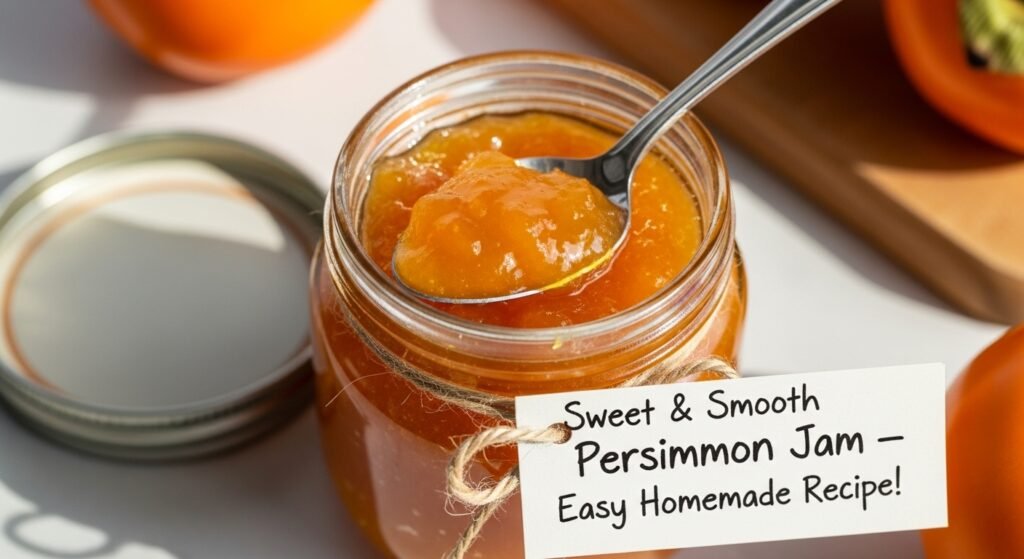
Persimmon Jam Recipe
Persimmon jam is underrated, mostly because people don’t understand how easy it is to make or how insanely flavorful it can be when done right. The fruit has natural sweetness, a smooth texture, and a deep honey-like flavor that turns into a rich, golden jam without needing complicated steps or special equipment. If you want a jam that tastes unique, spreads beautifully, and doesn’t rely on artificial ingredients, this is the recipe worth mastering.
This guide is straight, practical, and built for results—not vague instructions.
Understanding Persimmons Before You Start
There are two main persimmon types you’ll see:
1. Fuyu (Non-Astringent)
- Crisp like an apple
- Sweet even when firm
- Easy to cook
These are perfect for chunkier jam.
2. Hachiya (Astringent)
- Must be fully soft and jelly-like before eating
- Extremely sweet when ripe
- Great for smooth jam
Use these if you want a silky, deep-flavored spread.
If you pick the wrong ripeness, you’ll end up with bitterness or chalky flavor. So only use fully ripe persimmons—soft, bright, and sweet.
Why Persimmons Make Exceptional Jam
Most fruits need lots of sugar and pectin to get the right jam consistency. Persimmons don’t.
Here’s why:
- They naturally contain pectin—so the jam thickens well
- Their flesh becomes smooth when cooked
- They offer natural sweetness, so you can reduce added sugar
- The flavor becomes more intense as it simmers
This means you get a jam that tastes rich without excessive ingredients.
Ingredients for Persimmon Jam
A proper jam doesn’t need ten things. Stick to the essentials.
Base Ingredients
- 4 cups persimmon pulp (about 6–8 ripe persimmons)
- 1 to 1.5 cups sugar (adjust to sweetness of fruit)
- 2 tablespoons lemon juice
- 1 teaspoon grated lemon zest (optional but recommended)
Why These Work
- Sugar preserves and thickens
- Lemon juice balances sweetness and helps pectin activate
- Zest adds brightness that cuts through the richness
No fancy additives, no store-bought pectin needed.
How to Prepare Persimmons for Jam
You can’t dump whole fruits into a pot and hope for magic. Prep matters.
Steps
- Wash persimmons thoroughly.
- Peel the skin if it’s thick (Hachiya doesn’t need peeling).
- Remove seeds and hard inner core.
- Mash or blend the pulp—smooth or chunky depending on your preference.
Tip
If using Fuyu, chop them small to keep natural texture in the final jam.
Step-by-Step Persimmon Jam Recipe
Here’s the cleanest, most reliable method.
1. Combine Ingredients
Add persimmon pulp, sugar, lemon juice, and zest to a saucepan.
2. Heat Slowly
Start on low heat to melt the sugar without burning.
3. Increase to Medium Heat
Let the mixture bubble gently. Stir often.
4. Simmer
Cook 25–35 minutes depending on the thickness you want.
5. Check for Doneness
Use the cold plate test:
- Put a spoonful of jam on a chilled plate
- Wait 10 seconds
- If it wrinkles when pushed, it’s ready
6. Cool and Store
Transfer to sterilized jars. Seal and let cool.
That’s it. No overcomplication.
How to Adjust Texture
You’re in control here. Don’t settle for something that doesn’t match your style.
For Smooth Jam
Blend the pulp completely before cooking.
For Chunky Jam
Mash lightly with a fork so small pieces remain.
For Thick Jam
Cook longer to evaporate excess liquid.
For Spreadable, Soft Jam
Add a splash of water during cooking.
Persimmon Jam Flavor Variations
If you want something beyond the classic taste, here are variations that actually work—not gimmicks.
Cinnamon Persimmon Jam
Add ½ teaspoon cinnamon during cooking.
Warm, cozy, perfect for winter.
Ginger Persimmon Jam
Add 1 teaspoon grated fresh ginger.
Sharp contrast to the sweet jam—great on toast.
Vanilla Persimmon Jam
Add 1 teaspoon vanilla extract at the end.
Gives a dessert-like aroma.
Cardamom Persimmon Jam
Add ¼ teaspoon cardamom.
Exotic, fragrant, pairs beautifully with persimmon.
Orange Persimmon Jam
Add orange zest + 2 tablespoons fresh orange juice.
Boosts citrus brightness.
How to Use Persimmon Jam
Most people only think “toast,” which is boring. Here’s where the jam shines:
- Spread on pancakes
- Fill pastries or doughnuts
- Spoon over yogurt
- Serve with cheese boards
- Add to oatmeal
- Glaze meats
- Use as cake filling
- Mix into smoothies for natural sweetness
The flavor is versatile—play with it.
Storage Guidelines
Proper storage keeps flavor fresh and prevents spoilage.
Refrigerator
Lasts 3–4 weeks.
Freezer
Lasts 6 months—store in freezer-safe jars.
Shelf Storage (Canned)
Lasts up to 1 year if properly sealed in sterilized jars.
Common Mistakes to Avoid
1. Using Unripe Persimmons
This gives a bitter, chalky taste—not fixable.
2. Adding Too Much Sugar
Persimmons are naturally sweet. Start with less and adjust.
3. Not Stirring Enough
Jam burns easily at the bottom. Keep it moving.
4. Overcooking
This makes the jam too stiff and dark.
5. Skipping Lemon Juice
The jam won’t set properly and will taste too heavy.
How to Fix Jam Issues
Jam Too Thin
Cook 5–10 minutes longer.
Jam Too Thick
Add 1–2 tablespoons hot water and stir.
Jam Too Sweet
Add extra lemon juice to balance.
Jam Tastes Flat
Add a pinch of salt or zest.
Nutritional Benefits of Persimmon Jam
You’re not eating this for health, but it still has benefits:
- High in antioxidants
- Good fiber content
- Contains vitamins A, C, and E
- Natural sugars, not artificial
- No preservatives
Just keep portions controlled since it’s still a jam.
Why Homemade Persimmon Jam Is Better
Store-bought fruit jams are loaded with:
- High-fructose corn syrup
- Artificial pectin
- Preservatives
- Artificial color
Homemade jam has clean ingredients and better flavor. Plus, you control sweetness and thickness—nothing unnecessary.
Final Thoughts
Persimmon jam is one of the easiest and most rewarding homemade preserves you can make. With minimal ingredients, simple steps, and a naturally rich fruit, your jam will turn out flavorful, smooth, and far better than anything from a store. Stick to ripe persimmons, balance with lemon, and simmer patiently. That’s all it takes.