How to Make the Most Juicy Spatchcock Turkey
Spatchcock Turkey Recipe
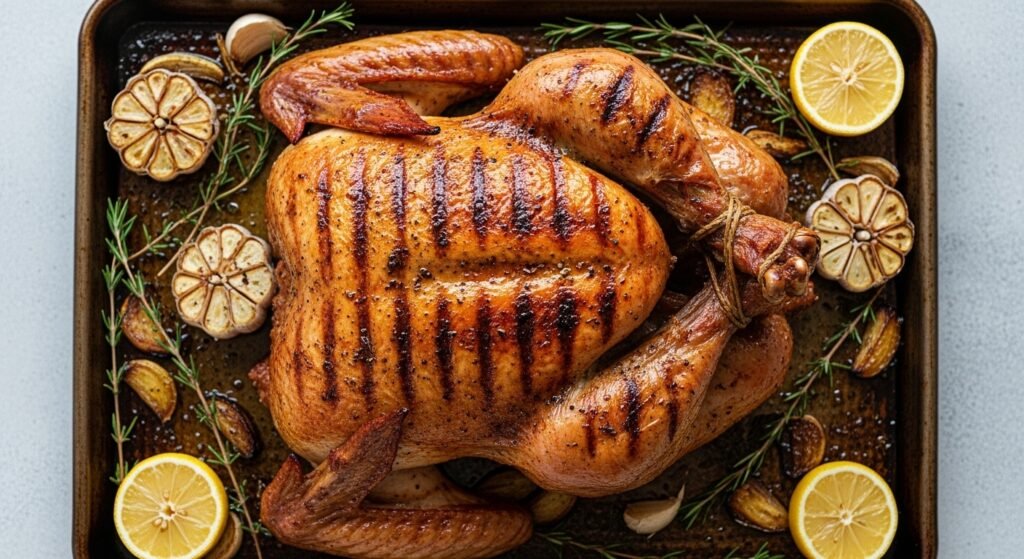
Why Spatchcocking a Turkey Is the Smarter Method
Most people cook turkey the slow, traditional way: whole, uncut, and uneven. That’s exactly why their turkey ends up dry in some parts and undercooked in others. Spatchcocking fixes that problem immediately. When you spatchcock a turkey, you remove the backbone and flatten the bird. This exposes more surface area, helps the turkey cook evenly, speeds up roasting time, and gives you crispier skin. It’s the most practical method if you actually want a consistently juicy bird with zero guesswork. Instead of waiting four hours for a whole turkey to struggle through the oven, a spatchcocked turkey cooks in half the time and tastes much better.
What Exactly Is Spatchcocking
Spatchcocking is a butchery technique where you butterfly the turkey by cutting out the backbone and pressing the breast down until it lies flat. This allows hot air to circulate more efficiently, similar to how a roast chicken cooks. The result is predictable: the breast stays juicy, the legs cook faster, and the skin crisps more evenly. If you’re serious about cooking, this is the only way a turkey should be roasted.
Tools You Need Before You Start
A spatchcock turkey doesn’t require anything special, but you need the right tools to avoid struggling with the backbone.
Sharp kitchen shears
A sturdy cutting board
Paper towels
A chef’s knife (optional for pressing joints)
Roasting tray or baking sheet
Rack (optional but helps with airflow)
Weak scissors will fight you. Use strong poultry shears so you can cut cleanly through the ribs. Paper towels are critical to grip the bird because it gets slippery.
Selecting the Right Turkey for Spatchcocking
Not every turkey behaves the same in the oven. Size matters. A 10–14 pound turkey is ideal for spatchcocking. Smaller is easier to flatten; larger gets awkward and requires more force. Avoid pre-brined turkeys because many store-bought brines make the meat overly salty or mushy. Choose fresh or minimally processed birds. If frozen, thaw completely in the refrigerator for 24–48 hours before cutting. Spatchcocking a half-frozen bird is a guaranteed mess.
How to Spatchcock the Turkey Step-by-Step
Here’s the clean, efficient method:
Place the turkey breast-side down.
Locate the backbone running down the center.
Use strong kitchen shears to cut along one side of the backbone.
Repeat on the other side and remove the backbone entirely.
Flip the turkey breast-side up.
Press firmly on the breastbone until it cracks and the turkey lies flat.
Tuck the wings under the breast so they don’t burn.
That’s it. No overthinking. The key is applying firm pressure when flattening. If you hear a loud crack, that’s normal.
Using the Backbone Instead of Wasting It
Don’t throw the backbone away like most people. Use it. Roast it or simmer it to make a rich turkey stock. That stock can be used for gravy, soups, or stuffing. If you’re cooking for a large gathering, homemade stock makes everything taste better.
Preparing the Turkey for Roasting
A spatchcock turkey cooks fast, so prep matters. Pat the turkey dry with paper towels to ensure crispy skin. Moisture is the enemy of browning. Season the bird generously with salt. If you want café-level flavor, salt the turkey the night before and leave it uncovered in the fridge. This dry brine method makes the skin crisp up beautifully.
After salt, add any herbs or spices you prefer. Popular combinations include garlic powder, smoked paprika, thyme, sage, and black pepper. Brush the turkey with olive oil or melted butter for deeper browning.
Classic Herb Butter for Maximum Flavor
A lot of people apply seasoning only on the surface. That’s amateur-level cooking. You want flavor inside the meat too. Mix softened butter with minced garlic, chopped herbs, lemon zest, salt, and pepper. Gently lift the turkey skin and rub this mixture underneath. This keeps the meat moist and adds serious flavor to the breast.
Choosing the Best Roasting Method
You have two main roasting options:
High Heat Method (Fast and Crispy)
Roast at 450°F (230°C)
Perfect for crisp skin
Reduces cooking time drastically
Best for smaller turkeys
Moderate Heat Method (Balanced and Safer)
Roast at 400°F (205°C)
Still fast but safer for beginners
More even temperature
Easier to control doneness
A spatchcocked turkey usually cooks in 75–90 minutes depending on size. Compare that to 3–4 hours for a whole turkey. If your oven struggles with high heat, stick to 400°F.
How to Roast the Turkey Perfectly
Lay the turkey flat on a baking sheet or tray. If you have a wire rack, place the turkey on top so heat circulates better. Add vegetables under the turkey—onions, carrots, garlic, celery. The drippings will flavor them, and you can use them as the base of your gravy.
Roast until the internal temperature reaches 160–165°F (71–74°C) at the thickest part of the breast. Don’t guess. Don’t trust cooking time charts. Use an instant-read thermometer. It’s the only accurate way to avoid overcooking.
If the skin darkens too quickly, cover with foil loosely. But don’t wrap it tightly or you’ll destroy the crispiness.
Resting the Turkey After Cooking
Once your turkey hits 165°F, pull it out and let it rest for 15–20 minutes. Resting allows juices to redistribute. If you cut too soon, the juices will run out and leave the meat dry. This happens to impatient cooks every single year. Don’t be that person. Rest the bird.
Carving the Spatchcocked Turkey
Carving a spatchcocked turkey is easier because the bird is already flattened. Start by removing the legs. Cut through the natural joint. Separate thighs and drumsticks. Remove the wings. Then slice the breast by cutting parallel to the breastbone. You get long, even slices instead of awkward chunks.
Making a Rich Gravy From Drippings
Turkey drippings from a spatchcock roast are more concentrated because the bird cooks faster. Use the drippings to make gravy:
Heat a pan with butter.
Whisk in flour to make a roux.
Add turkey stock made from the backbone.
Pour in the roasted drippings.
Simmer until thick and smooth.
You end up with a deeper, richer gravy compared to a standard whole-roast turkey.
Flavor Variations to Customize Your Spatchcock Turkey
The beauty of this method is how flexible it is. Try different flavor profiles depending on your meal:
Lemon Herb
Use lemon zest, thyme, rosemary, garlic, and olive oil.
Smoky Paprika Rub
Smoked paprika, black pepper, garlic, and onion powder.
Butter Garlic Roast
Lots of garlic butter under the skin for a richer flavor.
Cajun Style
Paprika, cayenne, thyme, oregano, and garlic powder.
Maple Glazed
Maple syrup brushed during the last 20 minutes for a subtle sweetness.
Each variation works well because spatchcocking exposes more surface area for seasoning to cling to.
Why Spatchcock Turkey Cooks Faster
Flattening the turkey solves the biggest problem of turkey roasting: uneven heating. When the turkey lies flat, the breast and legs cook at similar speeds. Heat hits the bird uniformly, so you don’t end up with a dry breast and underdone legs. The oven doesn’t struggle to push heat through a thick cavity because there is no cavity. More exposed surface means more browning and faster cooking. It’s science, not magic.
Tips to Get Crispy Skin Every Time
Crispy skin is non-negotiable. Here’s how to guarantee it:
Dry the turkey thoroughly
Salt the turkey in advance
Use high heat for part of the roast
Avoid too much liquid in the pan
Don’t cover tightly with foil
Start on high temp, finish lower if needed
Moisture is the enemy. Airflow is your friend.
What to Serve With Spatchcock Turkey
You can build an entire meal around this turkey. The best sides include:
Mashed potatoes
Roasted vegetables
Stuffing
Cranberry sauce
Green beans
Buttery dinner rolls
Gravy made from drippings
A spatchcock turkey goes with anything because the flavor is neutral, savory, and clean.
Storing Leftovers Properly
Turkey leftovers are gold—if stored correctly. Slice the meat and put it in airtight containers. Refrigerate for up to 3–4 days. Freeze for up to 2 months. Use leftovers for sandwiches, salads, wraps, soups, or fried rice. Don’t store the whole bird in one piece; it cools unevenly and increases food safety risks.
Common Mistakes to Avoid
Here are the predictable mistakes that ruin this recipe:
Not thawing the turkey completely
Not cutting out the backbone cleanly
Skipping the dry brine
Using dull shears
Overcooking the meat
Not using a thermometer
Failing to rest the turkey
These mistakes turn an easy recipe into a disaster. Avoid them and your turkey will come out perfect every time.
Final Thoughts
A spatchcock turkey is objectively better than a whole-roast turkey in every way: faster cooking, juicier meat, crispier skin, and more predictable results. If you want a turkey that tastes as good as it looks, this is the technique you should rely on. Once you try it, you’ll never bother roasting a turkey the old-fashioned way again.