Creamy Peanut Dipping Sauce Recipe Made Easy
Peanut Dipping Sauce Recipe
Introduction to Peanut Dipping Sauce
Peanut dipping sauce is one of those things people love but rarely bother making at home. That’s a mistake. The store-bought ones are overpriced, bland, and full of preservatives. Making your own gives you better taste, better texture, and way more control. Whether you’re making spring rolls, grilled chicken, satay, noodles, salads, or dumplings, a good peanut sauce instantly elevates the flavor. It’s creamy, nutty, salty, slightly sweet, and adaptable to any cuisine—Thai, Vietnamese, Indonesian, or even fusion dishes.
This guide breaks down everything: ingredients, the right method, variations, storage rules, mistakes to avoid, and how to pair it perfectly with different foods.
What Is Peanut Dipping Sauce?
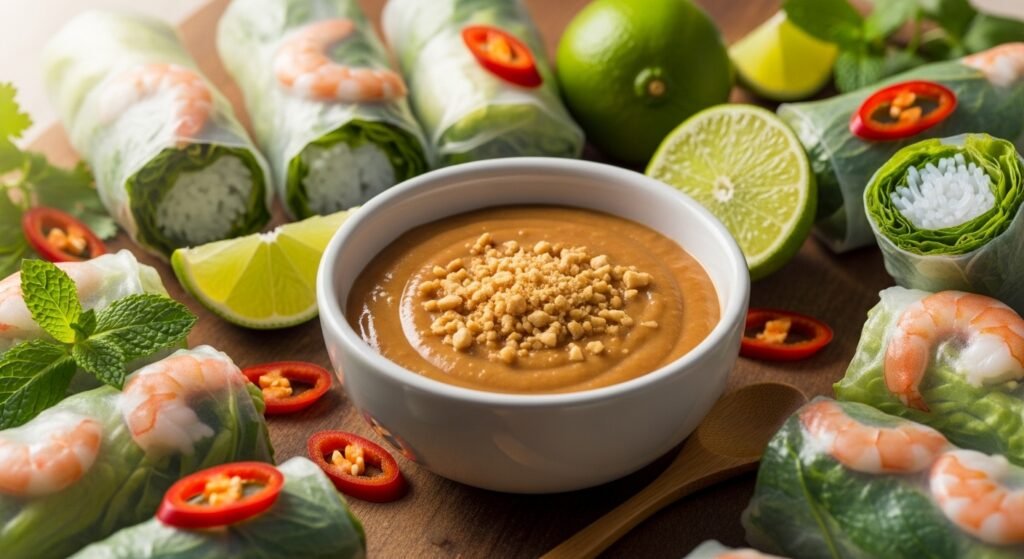
Peanut dipping sauce is a smooth blend made from peanut butter, soy sauce, garlic, lime, sugar, and seasonings. It’s traditionally used in Southeast Asian cuisine, especially with satay and fresh spring rolls. The beauty of this sauce lies in its balance: salty from soy sauce, sweet from sugar or honey, acidity from lime or vinegar, and creaminess from peanuts. The texture can be thick or thinner depending on what you’re serving it with.
Why You Should Make It at Home
Let’s get straight to the point:
- Cheaper: Costs far less than store-bought sauces.
- Cleaner ingredients: No preservatives, no artificial flavors.
- Fully customizable: Adjust sweetness, spice, saltiness, and thickness.
- Universal use: Works with nearly every Asian-inspired dish.
- Takes only 5 minutes: Zero excuses.
If you care about real flavor, homemade is the only option that makes sense.
Ingredients You Need
This sauce is straightforward and uses ingredients most kitchens already have.
- ½ cup creamy peanut butter
- 2 tablespoons soy sauce
- 1 tablespoon rice vinegar or lime juice
- 1 tablespoon honey or brown sugar
- 1–2 cloves garlic, minced
- ½ teaspoon grated ginger (optional but recommended)
- ½ cup warm water to thin the sauce
- ½–1 teaspoon chili flakes or sriracha (optional)
Choose peanut butter based on your preference. Smooth gives the classic texture, crunchy adds interesting bite.
Choosing the Right Peanut Butter
People overcomplicate this. Here’s the truth:
- Natural peanut butter gives a richer, roasted peanut flavor.
- Regular peanut butter gives a creamier, more consistent texture.
- Crunchy works only if you want texture.
- Sweetened peanut butter reduces the need for honey or sugar.
If you want the most balanced flavor, use creamy natural peanut butter.
Step-by-Step Peanut Dipping Sauce Recipe
This method works every time. No guessing, no mistakes.
Step 1: Combine Peanut Butter and Soy Sauce
In a mixing bowl, add peanut butter and soy sauce. Stir until it starts to loosen. This helps the peanut butter blend smoothly.
Step 2: Add Rice Vinegar or Lime Juice
This brings acidity and balances the richness. Don’t skip it unless you enjoy flat-tasting sauce.
Step 3: Add Honey and Garlic
Honey adds sweetness and helps round out the flavor. Minced garlic brings sharpness and aroma. If using ginger, add it now.
Step 4: Add Chili
Chili flakes or sriracha give heat. Adjust based on your spice tolerance.
Step 5: Thin the Sauce with Warm Water
Add warm water slowly while mixing. Warm water melts the peanut butter and prevents clumping. Add until you reach your preferred thickness.
Step 6: Taste and Adjust
This sauce should balance salty, sweet, tangy, and savory. Adjust each component:
- Too thick? Add more water.
- Too salty? Add more honey or lime.
- Too sweet? Add more soy sauce.
- Too tangy? Add more peanut butter.
Flavor Variations
One recipe is not enough if you want versatility. Here are strong variations that work with different cuisines:
Thai-Style Peanut Sauce
- Add ½ teaspoon red curry paste
- Add coconut milk instead of water
- Add more lime juice
Vietnamese Peanut Sauce
- Use hoisin sauce
- Add roasted peanuts on top
- Keep it slightly thinner
Indonesian Satay Peanut Sauce
- Add kecap manis (sweet soy sauce)
- Use chili paste
- Add roasted crushed peanuts
Spicy Peanut Sauce
- Add extra sriracha or Thai chili
- Use toasted chili oil
Coconut Peanut Sauce
- Replace half the water with coconut milk
- Simmer for 2–3 minutes for deeper flavor
Sesame Peanut Sauce
- Add 1 tablespoon toasted sesame oil
- Add extra soy sauce for umami
Tips for the Best Peanut Dipping Sauce
Don’t overthink, just follow these principles:
- Warm water only: Cold water makes peanut butter clump.
- Mix slowly: Peanut butter needs time to emulsify.
- Taste constantly: This sauce is all about balance.
- Rest before serving: 5 minutes lets flavors settle.
- Use fresh garlic: Garlic paste never gives the same sharpness.
How to Store Peanut Dipping Sauce
This sauce stores extremely well and tastes even better after sitting.
- Store in an airtight glass jar.
- Keep in the refrigerator.
- Lasts up to 7–10 days.
- Stir before serving—peanut butter thickens when cold.
If you want a longer shelf life, avoid adding fresh garlic and ginger. Their moisture reduces storage time.
When the Sauce Goes Bad
Don’t be stupid about food safety. If you see:
- Mold
- Sour or fermented smell
- Separation that doesn’t mix back
- Grayish or dull color
Throw it out. Sauce is cheap. Food poisoning isn’t worth it.
How to Use Peanut Dipping Sauce
Here’s where the sauce becomes a game-changer. You can pair it with far more than satay.
Spring Rolls
Thin the sauce slightly to make it a smooth dip.
Chicken Satay
This is the classic combo. Keep the sauce thick.
Grilled Meats
Works with beef, pork, shrimp, or tofu.
Noodles
Use it as a dressing for cold noodles or hot stir-fry.
Salads
Add more lime and water, and it becomes a perfect salad dressing.
Dumplings
A spoon of chili oil plus this sauce = killer dumpling dip.
Burgers or Wraps
Spread a thin layer inside chicken wraps or veggie rolls.
Rice Bowls
Drizzle over rice bowls for instant flavor.
Common Mistakes to Avoid
Let’s be blunt: most people mess this up by ignoring simple rules.
- Using cold water: Causes grainy sauce.
- Skipping acidity: Lime/vinegar is non-negotiable.
- Using low-quality peanut butter: Taste starts with peanuts.
- Adding too much soy sauce: Makes it overly salty.
- Not adjusting consistency: Sauce should fit the dish.
Conclusion
Peanut dipping sauce is one of the easiest and most versatile sauces you can make at home. It requires no cooking, zero effort, and delivers huge flavor. Once you master the base recipe, you can twist it into Thai, Vietnamese, Indonesian, spicy, sweet, or coconut-loaded versions in seconds. This sauce works with everything—spring rolls, grilled meats, noodles, salads, and more.
Whether you’re cooking daily or creating food content, this sauce should be part of your kitchen basics. It’s simple, customizable, and far better than anything you’ll buy in a store.